If you've ever wondered whether one or two drinks really matter before you drive, here's the direct answer: yes. The research behind 0.05 BAC Canada rules shows crash risk rising well before the 0.08 criminal limit. At 0.05, the best large study puts risk at about double that of a sober driver. So the only plan that reliably keeps you out of both danger and the warn range is to decide before the first drink that you won't be driving.
Below we go through what the drinking and driving research actually found, why British Columbia, Alberta and Ontario penalize drivers at 0.05, where the evidence is weaker than it's often made to sound, and what you can do about it tonight.
The Grand Rapids study and the famous "dip"
Modern work on alcohol crash risk traces back to the 1964 Grand Rapids Study led by Robert Borkenstein. A 2015 NHTSA research note describes it as providing "compelling evidence that even moderate BAC levels were associated with increased crash risk and that the risk grew rapidly at BACs of .10 or higher" (Compton & Berning, NHTSA, 2015).
The raw Grand Rapids data also produced a strange result. Drivers at very low BACs, roughly 0.01 to 0.04, looked slightly less likely to crash than sober drivers. Researchers called this the "Grand Rapids dip." In 1994, Hurst, Harte and Frith reanalyzed the data in Accident Analysis & Prevention. They found the dip was caused by demographic bias: different groups of drivers were unevenly represented at different BAC levels. Once that was corrected, risk rose with BAC "regardless of self-reported drinking frequency" (Hurst, Harte & Frith, 1994). The same paper found habitual drinkers had lower overall risk than infrequent drinkers at every BAC level. That does not mean regular drinking protects anyone. It mostly shows how easily these comparisons get confounded.
The later case-control studies
Long Beach and Fort Lauderdale
A case-control study compares drivers who crashed with "control" drivers who passed the same spot at the same time on another day, so the two groups face similar roads. NHTSA's Long Beach/Fort Lauderdale study collected data on 2,871 crashes. Control drivers were sampled one week later at the same location, day of week and time of day. Of 14,985 drivers who could have been tested, 91.7% of crash drivers and 97.9% of controls gave breath samples. Without adjustment, risk rose starting at about 0.05 to 0.06 BAC and climbed steeply above 0.10. After adjusting for covariates and for missing data such as hit-and-run drivers and refusals, "statistically significant risk occurred at 0.04% BAC" (Blomberg et al., NHTSA, 2005).
Virginia Beach
The largest US study of its kind ran 24 hours a day for 20 months in Virginia Beach, with breath samples from 3,353 crash-involved drivers and 6,868 controls. Adjusted for age and gender, relative crash risk was 1.20 at 0.03 BrAC, 2.07 at 0.05, 3.93 at 0.08, 5.64 at 0.10 and 12.18 at 0.15. The authors summarize it as risk that "grows exponentially" with alcohol level (Compton & Berning, 2015). The same note cites a pooled European (DRUID) analysis that estimated drivers between 0.01 and under 0.05 at 1 to 3 times the risk of sober drivers.
0.05 BAC Canada rules: why provinces act below the criminal limit
Under the federal Criminal Code, the prohibited level is 80 mg of alcohol per 100 mL of blood, which is 0.08. Justice Canada notes that "provinces and territories have additional laws or regulations that may apply" (Department of Justice Canada). Several provinces use those powers to apply fast administrative penalties at 0.05. No criminal charge is needed, but the consequences are real:
- British Columbia: a first "Warn" reading on a roadside screening device means a 3-day driving prohibition, possible 3-day vehicle impoundment, a $200 penalty and a $250 reinstatement fee. That rises to 30 days and about $1,330 in combined costs for a third time within five years (Government of B.C.).
- Alberta: a first warn-range reading (0.05 to 0.079) brings a 3-day licence suspension, a 3-day vehicle seizure and a $300 fine plus a 20% victim surcharge. A third occurrence brings a 30-day suspension and the IMPACT program (Government of Alberta).
- Ontario: a first warn-range occurrence now brings a 7-day immediate suspension, an 8-hour education course and a $250 penalty. That rises to 30 days plus a six-month ignition interlock condition on a third occurrence. Drivers 21 and under, and G1, G2, M1 and M2 licence holders, must have zero alcohol (Government of Ontario).
The reasoning matches the risk curves above. By 0.05, the case-control data show meaningfully higher risk, and a quick roadside sanction can be applied far more often than a criminal prosecution. B.C. reports its own results: the government credits its roadside prohibition program with "an estimated 238 lives saved and a 52% reduction in alcohol-related motor vehicle fatalities" since 2010 (B.C. government factsheet). Keep in mind this is the government's own estimate, and the program also included tougher penalties above 0.08, so not all of the drop can be credited to the 0.05 tier.
What low BAC impairment looks like
Crash statistics tell you how often things go wrong. Lab studies show why. NHTSA's review of 112 studies published between 1981 and 1997 concluded that alcohol impairs some driving skills "beginning with any significant departure from zero BAC." The majority of studies found significant impairment by 0.05, and more than 94% found impairment by 0.08. Some skills were affected at 0.01, while others held up until about 0.06 (Moskowitz & Fiorentino, NHTSA, 2000).
In practice, low BAC impairment rarely looks like weaving. It looks like handling a lane change, a pedestrian and a changing light at the same time a little less well than you normally would, while feeling completely fine. That gap between how you feel and how you perform is exactly why your own judgment is a poor test.
Caveats: what the research does not show
- The low end is noisy. In Virginia Beach, adjusted risk at 0.01 and 0.02 came out below 1 (0.54 and 0.85), echoing the old Grand Rapids dip. The share of drivers between 0.05 and 0.08 was not significantly different between crash and control groups (0.54% vs 0.33%), because few drivers fell in that range.
- Models disagree. NHTSA notes that at 0.04 its model estimated relative risk at 1.60, compared with 1.00 under the Blomberg model, though most estimates fell within 95% confidence limits (Compton & Berning, 2015).
- Location and era. The large case-control studies are American and decades apart. Canadian roads and drivers may differ.
- Averages, not you. Relative risk describes populations. It cannot tell you your BAC or your risk on a given night, and the lab review found people vary a lot in which skills fail first.
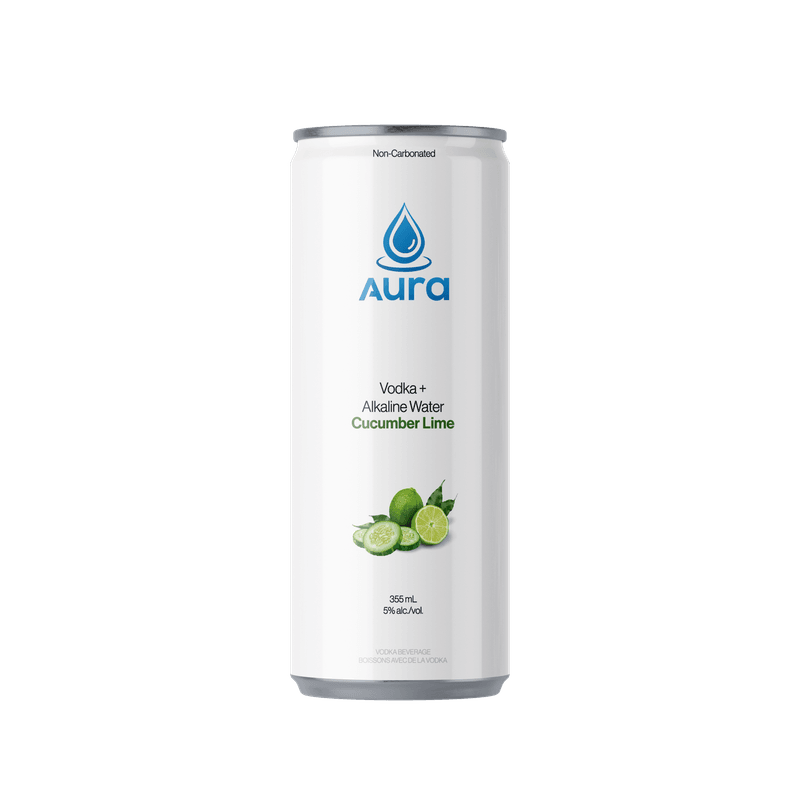
- Nothing in the can changes this. A still vodka water has the same alcohol as any other drink with the same alcohol content. No bubbles may feel lighter to some people, but that is a comfort preference, not a safety or health difference. It doesn't change your BAC or your impairment.
What to do today
- Decide before the first drink. Book a ride, pick a designated driver, or plan to stay over before you open anything.
- Don't drink to a number. You can't feel 0.04 versus 0.06, and the research shows risk rising across that whole range.
- Only time lowers BAC. Coffee, food, water and fresh air don't speed it up. Leave plenty of time, including the next morning.
- Know your licence class. In Ontario, any alcohol at all is off-limits if you're 21 or under or hold a G1, G2, M1 or M2 licence.
If you're hosting this weekend, set out our vodka water cocktails in Cucumber Lime, Coconut Pineapple and Mango Peach. They're still, never carbonated, with no added sugar, and the car keys stay in a bowl by the door. Read why Aura is made the way it is, or find a retailer through where to buy. Our direct ordering delivers to Ontario addresses. In B.C. and Alberta, look for Aura at BC Liquor Stores, licensed private retailers and AGLC-licensed retailers. Please enjoy responsibly, only if you're of legal drinking age, and never drink and drive.
This article summarises published research for general interest and is not medical or legal advice. Penalties change, so check your province's current rules.
Sources
- Compton, R.P., & Berning, A. (2015). Drug and Alcohol Crash Risk (Traffic Safety Facts Research Note, DOT HS 812 117). National Highway Traffic Safety Administration. doi:10.21949/1525811. rosap.ntl.bts.gov/view/dot/1993
- Blomberg, R.D., Peck, R.C., Moskowitz, H., Burns, M., & Fiorentino, D. (2005). Crash Risk of Alcohol Involved Driving: A Case-Control Study. Final report, NHTSA, contract DTNH22-94-C-05001. TRID accession 01045168. trid.trb.org/View/804190
- Hurst, P.M., Harte, D., & Frith, W.J. (1994). The Grand Rapids dip revisited. Accident Analysis & Prevention, 26(5), 647–654. trid.trb.org/View/409746
- Moskowitz, H., & Fiorentino, D. (2000). A Review of the Literature on the Effects of Low Doses of Alcohol on Driving-Related Skills (DOT HS 809 028). NHTSA. doi:10.21949/1525468. rosap.ntl.bts.gov/view/dot/1677
- Department of Justice Canada. Impaired Driving Laws. justice.gc.ca
- Government of British Columbia, RoadSafetyBC. Alcohol and drug related driving prohibitions and suspensions. gov.bc.ca
- Government of British Columbia. Factsheet: Made-in-B.C. law stops drinking drivers and saves lives. news.gov.bc.ca
- Government of Alberta. Impaired driving penalties. alberta.ca
- Government of Ontario. Impaired driving (updated June 30, 2026). ontario.ca