Maybe you've noticed it already. The glass of wine or the single cocktail you've enjoyed for decades now leaves you foggier, wobblier or more tired than it used to. You aren't imagining it, and it isn't just a lack of practice. Research on alcohol and aging points to three concrete reasons: your body holds less water, your body composition changes, and you're more likely to be taking medications that interact with alcohol. Here is what the studies actually show, where they fall short, and what you can do about it today if you're drinking over 60 in Canada.
The short answer: same drink, higher blood alcohol
Alcohol spreads through the water in your body. If there's less water, the same amount of alcohol ends up more concentrated. As we age, lean muscle (which holds a lot of water) tends to decline and body fat (which holds little) tends to rise. The result is that a drink identical to one you had at 40 can produce a higher blood alcohol concentration (BAC) at 65. The U.S. National Institute on Alcohol Abuse and Alcoholism (NIAAA) puts it plainly in its Aging and Alcohol guidance: reduced muscle mass and body water can lead to higher BACs than in younger people drinking the same amount, so problems can start at lower levels of drinking.
What the research on alcohol and aging actually found
Body water and distribution: the 1977 Baltimore study
One of the foundational studies is Vestal and colleagues (1977) in Clinical Pharmacology & Therapeutics. The researchers gave 50 healthy adults aged 21 to 81 (mean age 53.3) a one-hour intravenous infusion of ethanol and took blood samples for up to four hours. Two findings matter most:
- Peak blood ethanol rose with age. Older participants reached higher peak concentrations, and their lean body mass and volume of distribution (essentially, how much body water the alcohol had to spread into) were smaller.
- Elimination did not slow with age. The authors reported that rates of ethanol elimination were not affected by age. In other words, older bodies in this study weren't clearing alcohol more slowly. They were starting from a higher peak.
That second point surprises a lot of people. The common belief that "my liver just can't keep up anymore" isn't what this study measured. The bigger driver was body composition.
Older women: higher peaks, and body water isn't the whole story
A later study by Davies and Bowen (1999) in Alcoholism: Clinical and Experimental Research looked specifically at women. Participants drank 30 g of alcohol and were split into young (21–25), middle-age (35–47) and older (over 60) groups. The older women reached a significantly higher mean peak BAC (0.0975 ± 0.018) than the young (0.0818 ± 0.016) or middle-age group (0.0811 ± 0.012).
Here's the twist: the authors concluded that the difference could not be fully explained by older women simply having less body water. They also argued that body fat percentage did not determine the BAC reached. So reduced body water is part of the picture of older adults and alcohol, but not a complete explanation.
Medications: the factor that grows fastest with age
The third piece is medication. Breslow, Dong and White (2015) analysed U.S. National Health and Nutrition Examination Survey data from 1999 to 2010 covering 26,657 adults. Among current drinkers, the adjusted prevalence of using an alcohol-interactive prescription medication was 41.5%. Among drinkers aged 65 and older it was 77.8%. The most common classes were cardiovascular drugs, central nervous system agents and metabolic agents.
NIAAA notes that sedating medications for anxiety, pain or sleep can add to alcohol's effects and raise the risk of falls, injuries, overdose and memory problems. It also lists specific interactions, such as aspirin with bleeding risk and acetaminophen with liver damage.
Why alcohol tolerance changes with age, in practice
Put together, the research suggests that alcohol tolerance changes with age mostly because of how your body handles a drink, not because of willpower or habit. NIAAA adds that older people are more sensitive to alcohol's effects on balance, coordination, attention and driving. That matters because a fall at 70 is far more serious than a stumble at 30. NIAAA also notes that women may be more susceptible than men to these effects.
What you can do today: practical guidance for drinking over 60
- Re-baseline your limit. Don't measure tonight against what you could handle years ago. If you used to have two drinks, try one and notice how you feel an hour later.
- Know Canada's guidance. The Canadian Centre on Substance Use and Addiction's Canada's Guidance on Alcohol and Health (released January 2023) describes a continuum of risk: 2 or fewer standard drinks a week is likely to avoid alcohol-related consequences, 3–6 raises the risk of several cancers, and 7 or more significantly raises the risk of heart disease and stroke. It advises not exceeding 2 drinks on any occasion. Its core message is simple: less is better.
- Ask your pharmacist one specific question. Bring your full medication list, including over-the-counter sleep aids, pain relievers and supplements, and ask: "Do any of these interact with alcohol, and how?" Given the Breslow figures, this is the single highest-value step for most people over 65.
- Eat first and pace slowly. Drinking with a meal and spacing drinks out avoids stacking alcohol on top of a peak.
- Alternate with water. It's an easy way to slow your pace and lower your total intake over an evening.
- Check the label. Alcohol content varies widely between products. Read the percentage on the can or bottle and use a standard-drink calculator instead of counting containers.
- Plan around balance and driving. Sit for longer conversations, keep night lighting on, and never drive after drinking.
Caveats: what the research does not show
An honest look at alcohol and aging has to cover the limits of the evidence:
- Small and older studies. The Vestal study had 50 participants and dates from 1977. The Davies and Bowen abstract does not report group sizes. Neither is a large modern trial.
- Route of intake. Vestal used intravenous infusion, which skips the stomach entirely. Real drinking involves digestion and absorption, which the study didn't capture.
- Mixed explanations. Vestal pointed to body composition, while Davies and Bowen found body water did not fully explain the age gap in women. The mechanism isn't fully settled.
- Healthy volunteers. Both studies tested healthy people. Results may differ for people with chronic illness.
- Exposure isn't harm. Breslow measured whether drinkers also used interactive medications, not whether they took them at the same time or were harmed. The data is also from the U.S., not Canada. The authors themselves called for data on actual simultaneous use.
Where Aura fits, and where it doesn't
Let's be clear: nothing in this research suggests any alcoholic drink is safer for older adults. Aura contains real vodka, and the alcohol in a can of Aura affects your body the same way the alcohol in any other drink does. Being still rather than carbonated doesn't change how intoxicating it is, and it isn't a health benefit.
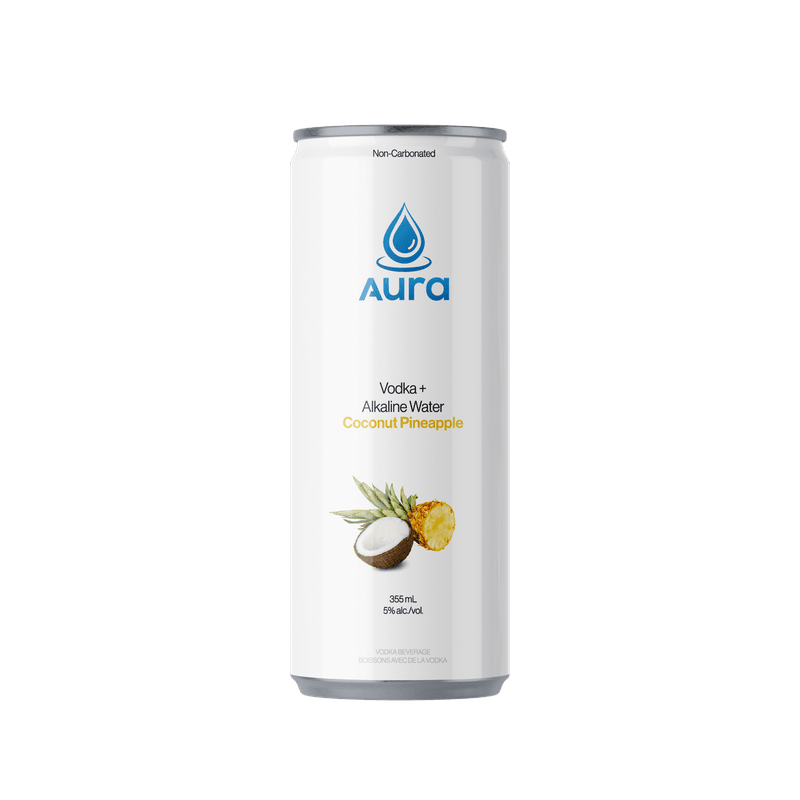
What Aura does offer is a simple, transparent drink: premium vodka, alkaline water and natural flavour in a 355mL can, with no added sugar, no artificial sweeteners, no preservatives, and gluten-free. It's a still drink with zero carbonation, so it's an alternative for people who don't like seltzers or vodka sodas. A single, clearly labelled can also makes it easier to count what you're drinking. Explore our vodka water cocktails in Cucumber Lime, Coconut Pineapple and Mango Peach, or read why Aura is made the way it is.
Enjoy it on your terms
If you choose to drink, choose less, pace yourself and talk to your pharmacist about your medications. Aura is sold across British Columbia, Alberta and Ontario. Our direct and wholesale ordering delivers to Ontario addresses only. In Alberta, look for AGLC-licensed private retailers. In BC, check BC Liquor Stores and licensed private retailers. Find your nearest option on our where to buy page.
Please enjoy responsibly, and only if you are of legal drinking age in your province. This article summarises published research for general interest and is not medical advice. Speak with your doctor or pharmacist about your own situation.
Sources
- Vestal RE, McGuire EA, Tobin JD, Andres R, Norris AH, Mezey E. Aging and ethanol metabolism. Clinical Pharmacology & Therapeutics. 1977;21(3):343–354. doi:10.1002/cpt1977213343. PMID: 837653. https://pubmed.ncbi.nlm.nih.gov/837653/
- Davies BT, Bowen CK. Total body water and peak alcohol concentration: a comparative study of young, middle-age, and older females. Alcoholism: Clinical and Experimental Research. 1999;23(6):969–975. PMID: 10397280. https://pubmed.ncbi.nlm.nih.gov/10397280/
- Breslow RA, Dong C, White A. Prevalence of alcohol-interactive prescription medication use among current drinkers: United States, 1999 to 2010. Alcoholism: Clinical and Experimental Research. 2015;39(2):371–379. doi:10.1111/acer.12633. PMID: 25597432. https://pubmed.ncbi.nlm.nih.gov/25597432/
- National Institute on Alcohol Abuse and Alcoholism. Aging and Alcohol. NIAAA, U.S. National Institutes of Health. Updated December 2025. https://www.niaaa.nih.gov/alcohols-effects-health/special-populations-co-occurring-disorders/older-adults
- Canadian Centre on Substance Use and Addiction. Canada's Guidance on Alcohol and Health. CCSA. January 2023. https://ccsa.ca/canadas-guidance-alcohol-and-health