It's 5 a.m. Your heart is going, you're replaying a conversation from eleven hours ago that nobody else will remember, and nothing is actually wrong. That specific, groundless dread is the day-after face of alcohol and anxiety — what people now call hangxiety — and it's one of the more consistently documented effects in the hangover literature. Here's what the research supports, what it doesn't, how the effect scales with dose, and how to tell an ordinary rough morning from something worth raising with a doctor.
The short version: the association is real and replicated; it isn't evenly distributed, because who you are matters as much as what you drank; and the best single predictor isn't how much alcohol was in your blood, but how drunk you got relative to your own normal.
What the research on alcohol and anxiety actually shows
The most comprehensive recent synthesis is a pre-registered systematic review by Rothman and colleagues in Drug and Alcohol Review, searching five databases through January 2025. It pooled 22 studies covering 6,152 participants (mean age 26.9, 57% female) and found a significant association between hangovers and increased negative affect — anxiety, stress and depressed mood (Rothman et al., 2026). It also identified what moves the needle: maladaptive emotion regulation, avoidant coping and repetitive negative thinking made it worse, while social support and mental resilience appeared protective.
A naturalistic experiment gives the effect a sharper edge. Marsh and colleagues tested 97 social drinkers at home — 50 drank as they normally would, 47 stayed sober — measuring state anxiety at baseline, after the drinking period, and the next morning. Alcohol only marginally reduced anxiety in the moment for highly shy participants, but produced a significant increase in anxiety the following day in that same group. Next-day anxiety also correlated significantly with AUDIT scores, a standard screening measure for problem drinking (Marsh et al., 2019). Put bluntly: drinking anxiety next day hit hardest in exactly the people most likely to be drinking to feel socially comfortable.
The rebound mechanism, in plain language
Alcohol acts on two opposing systems: GABA, the brain's main inhibitory “calm down” signal, and glutamate, its main excitatory “wake up” signal. A narrative review from Palmer and colleagues at Imperial College London describes that balance shifting during and after a drinking episode, with reduced GABA levels and receptor insensitivity alongside altered glutamate signalling (Palmer et al., 2019). As blood alcohol falls toward zero — which is when a hangover is defined as beginning — the sedation ends but the compensations haven't. You get a nervous system running hot for several hours with nothing left to damp it.
The honest caveat, which that review makes itself: much of the neurochemistry comes from animal work at doses well beyond ordinary human drinking. The same review's summary table notes that changes in cortisol, vasopressin, aldosterone and renin were not associated with hangover severity — so the popular “it's a cortisol spike” explanation isn't well supported. Inflammation looks more promising: interferon-gamma and IL-12 concentrations correlated positively with total hangover scores in human data.
Why the day-after anxiety is dose-dependent — with one big caveat
More alcohol, worse hangover, more negative affect: broadly true. But a 2020 consensus paper led by Joris Verster complicates the simple dose story usefully. The Alcohol Hangover Research Group had previously set 0.11% blood alcohol concentration as the threshold for “enough to produce a hangover” — roughly six US standard drinks over two hours. Pooling two student surveys, the authors found 20.5% of 2,822 students who reported a hangover had an estimated BAC well below that threshold. The paper also reports data from 307 adults in Crete, of whom 176 had a hangover after an average of just 3.0 drinks, at a mean estimated BAC of 0.03%; 98.3% were under 0.11%, and mean hangover severity was still 4.6 on a 0–10 scale (Verster et al., 2020).
So what predicted severity? A stepwise regression explained 58% of the variance in overall hangover severity, and the unique contributions were lopsided: subjective intoxication — how drunk you felt — accounted for 48.5%, sleep quality 7.2%, estimated BAC 1.2% and BMI 1.1%. The authors' reading is that drinking substantially more than your own usual amount is what produces the hangover, largely regardless of the absolute number. “Dose-dependent” is better understood as dose-relative-to-your-baseline. Someone who normally has one drink and has four is exposed; so is someone who normally has four and has ten.
Hangxiety versus something worth talking to a doctor about
Ordinary hangover malaise tracks the hangover: it arrives as blood alcohol reaches zero, peaks in the morning, and fades over the day. It's unpleasant, and it's a bad reason to drink again, but it resolves. Some patterns differ in kind rather than degree, and belong in a conversation with a family doctor or nurse practitioner:
- Anxiety that outlives the hangover — persisting for days, or present on days you haven't been drinking at all.
- Drinking specifically to manage anxiety. This is the most evidence-backed warning sign here. In their review for the US National Institute on Alcohol Abuse and Alcoholism, Anker and Kushner report that people with an anxiety disorder who drank to cope had a fivefold increased risk of developing alcohol dependence within three years, while those with an anxiety disorder who did not drink to cope had roughly the same risk as people with no anxiety disorder (Anker & Kushner, 2019).
- Morning symptoms that ease when you drink again — shakiness, sweating, a racing pulse. That pattern points toward withdrawal rather than hangover, and Canada's 2023 clinical guideline is explicit that unsupervised withdrawal can be life-threatening for people at risk of seizure or delirium tremens (Wood et al., CMAJ 2023). Confusion, hallucinations or a seizure are emergency-department symptoms, not wait-and-see ones.
- A screening score that flags risk. That same Canadian guideline stratifies AUDIT-C results as low risk at 0–4, moderate at 5–7 and high at 8 or above. It's a two-minute questionnaire and a reasonable thing to bring to an appointment.
What you can do this week
- Set a per-occasion ceiling, not just a weekly one. Canada's Guidance on Alcohol and Health, published by the Canadian Centre on Substance Use and Addiction in January 2023, places 1–2 standard drinks a week at low risk, 3–6 at moderate risk and 7 or more at increasingly high risk, with no more than 2 drinks on any single occasion (CCSA, 2023).
- Judge the night against your own normal. Per the Verster data, the occasion that hurts is the one well above your usual — a quiet weeknight drinker at a wedding is more exposed than the raw count suggests.
- Protect sleep. Sleep quality was the second-largest unique predictor of hangover severity. An earlier last drink buys you more than an earlier bedtime does.
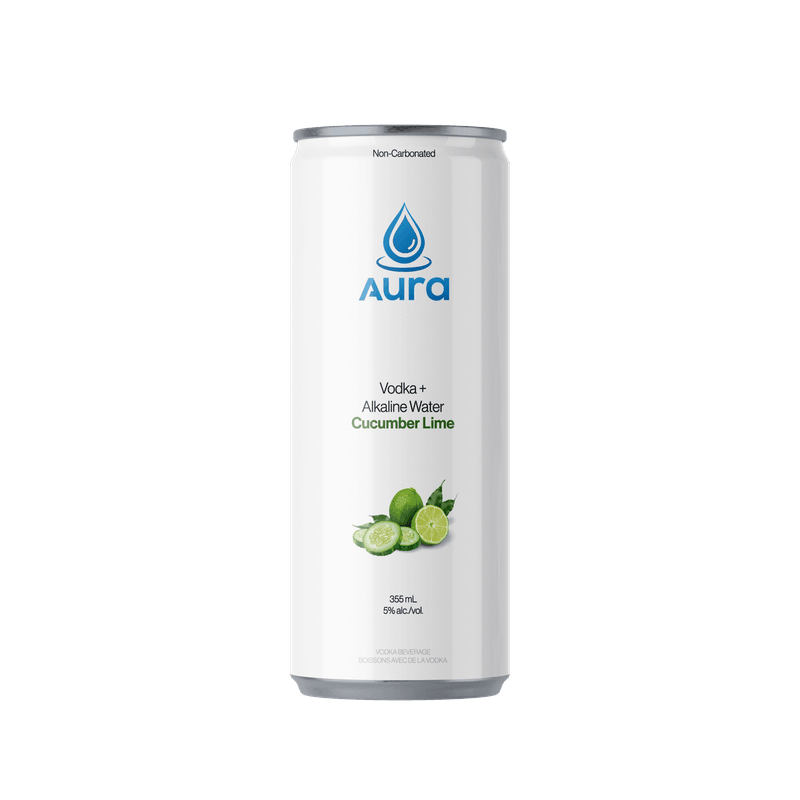
- Count in fixed units. Cans you can count beat free-poured glasses you can't. Our vodka water cocktails come in 355mL cans for the mundane reason that a can is a unit — not because the format changes what alcohol does.
- Plan the morning. Rumination and avoidant coping amplified hangover negative affect in the Rothman review, while social support was protective. A walk and a phone call are more defensible than lying in the dark re-reading your messages.
- Interrogate the motive. “I want this” and “I need this to cope” are different sentences with very different research attached.
What this evidence does not show
Several things. The base is thinner than confident headlines suggest: the Rothman review used synthesis without meta-analysis, so there's no pooled effect size — we can say the association is consistent, not how large it is. Marsh's experiment had 97 participants, was unblinded and naturalistic, and the effect appeared in a shy subgroup rather than across the sample. Much of the wider literature is retrospective self-report from student volunteers.
Results also genuinely conflict. Kim and colleagues compared 3,205 hangover-sensitive with 1,906 hangover-resistant drinkers across 5,111 students and found the sensitive group scored higher at baseline on DASS-21 anxiety (5.7 vs 5.3) and stress (9.1 vs 8.5), with no significant difference on depression. Those gaps reached significance on a sample that size, but the authors themselves call differences of 0.4 and 0.6 points too small to be clinically meaningful (Kim et al., 2023). Being hangover-prone does not mark you as an anxious person. And the older tension-reduction literature — the idea that alcohol reliably reduces anxiety — was summarised by Anker and Kushner as “negative, equivocal, and contradictory.”
Finally, and specific to us: none of this makes any alcoholic drink safer. Aura contains the same ethanol as anything else in your fridge, and no research anywhere shows that a still drink, a no-added-sugar drink or a gluten-free one reduces next-day anxiety, hangover severity or any alcohol mental health risk. Aura is still rather than sparkling because many people simply prefer drinking it that way — no bubbles, no bloating — and it's made with premium vodka, alkaline water and natural flavour, with no added sugar, no artificial sweeteners and no preservatives. Those are taste and formulation choices, not health claims, and anyone telling you otherwise deserves your suspicion. More on what we do and don't claim at why Aura.
If you're in Ontario, you can order our vodka water cocktails direct — Cucumber Lime, Coconut Pineapple and Mango Peach, 355mL cans, 24 to a case, delivered to Ontario addresses. In British Columbia and Alberta, check where to buy: Aura is carried through BC Liquor Stores and licensed private retailers in BC, and AGLC-licensed private retailers in Alberta. Whatever's in your glass, please be of legal drinking age, pace yourself and enjoy responsibly.
This article summarises published research for general interest and is not medical advice. If day-after anxiety is a regular feature of your life, speak to a healthcare professional.
Sources
- Rothman R, Hayley AC, Aitken B, Downey LA. “A Systematic Review of the Impact of the Alcohol Hangover Upon Negative Affect.” Drug and Alcohol Review, 2026;45(1). doi:10.1111/dar.70052. PMID 41129386. pubmed.ncbi.nlm.nih.gov/41129386
- Marsh B, Carlyle M, Carter E, Hughes P, McGahey S, Lawn W, Stevens T, McAndrew A, Morgan CJA. “Shyness, alcohol use disorders and ‘hangxiety’: A naturalistic study of social drinkers.” Personality and Individual Differences, 2019;139:13–18. doi:10.1016/j.paid.2018.10.034. sciencedirect.com
- Palmer E, Tyacke R, Sastre M, Lingford-Hughes A, Nutt D, Ward RJ. “Alcohol Hangover: Underlying Biochemical, Inflammatory and Neurochemical Mechanisms.” Alcohol and Alcoholism, 2019;54(3):196–203. doi:10.1093/alcalc/agz016 (author accepted manuscript, Imperial College London Spiral repository). spiral.imperial.ac.uk
- Verster JC, Kruisselbrink LD, Slot KA, et al. “Sensitivity to Experiencing Alcohol Hangovers: Reconsideration of the 0.11% Blood Alcohol Concentration (BAC) Threshold for Having a Hangover.” Journal of Clinical Medicine, 2020;9(1):179. doi:10.3390/jcm9010179. mdpi.com
- Kim AJ, Merlo A, Mackus M, Bruce G, Johnson SJ, Alford C, Sherry SB, Stewart SH, Verster JC. “Depression, Anxiety, and Stress among Hangover-Sensitive and Hangover-Resistant Drinkers.” Journal of Clinical Medicine, 2023;12(8):2766. doi:10.3390/jcm12082766. pmc.ncbi.nlm.nih.gov
- Anker JJ, Kushner MG. “Co-Occurring Alcohol Use Disorder and Anxiety: Bridging Psychiatric, Psychological, and Neurobiological Perspectives.” Alcohol Research: Current Reviews, 2019;40(1):arcr.v40.1.03. doi:10.35946/arcr.v40.1.03. PMID 31886106. pmc.ncbi.nlm.nih.gov
- Wood E, Bright J, Hsu K, Goel N, Ross JWG, Hanson A, Teed R, Poulin G, Denning B, Corace K, Chase C, Halpape K, Lim R, Kealey T, Rehm J. “Canadian guideline for the clinical management of high-risk drinking and alcohol use disorder.” CMAJ, 2023;195(40):E1364–E1379. doi:10.1503/cmaj.230715. cmaj.ca
- Canadian Centre on Substance Use and Addiction. “More than 6 drinks a week puts your health at risk: New Canada's Guidance on Alcohol and Health.” Ottawa, 17 January 2023. ccsa.ca