You added a case of Canadian vodka water to a cart, typed in a Calgary or Kelowna postal code, and checkout rejected it. Nothing is broken. People searching for alcohol delivery rules Canada expect one national answer, but liquor retailing is provincial — the rules deciding whether a box can legally reach your door are written separately in Toronto, Victoria and Edmonton. Here is what each framework permits, why a brand can ship to one province and not another, and how to read a retailer's shipping page in thirty seconds.
Alcohol delivery rules Canada: the federal layer is no longer the barrier
Clear the old myth away first. The federal Importation of Intoxicating Liquors Act (R.S.C. 1985, c. I-3, current to 2026-07-21) now reaches only imports "into a province from a place outside Canada." Section 3 was amended in 2019 (2019, c. 29, s. 186), and the consolidated text carries no general prohibition on moving liquor between Canadian provinces.
So Ottawa is almost never the reason an order is refused. Every remaining restriction on DTC alcohol shipping Canada-side is provincial, and each province built its rules around a different question: Ontario asks where did the liquor come from, British Columbia asks do you have a store, Alberta asks who supplied the order. Once you know the question, the liquor delivery laws stop looking arbitrary.
Ontario: the clearest path if you want to buy alcohol online
Ontario licenses the delivery activity itself, via a General or Affiliate Delivery Licence. The Alcohol and Gaming Commission of Ontario's General Delivery Licence Guide sets out the supply rule that matters most: a licensee must obtain the liquor from "any licensed retail store under the LLCA," which "includes the LCBO, The Beer Store, any manufacturer's on-site or off-site retail store."
The operational terms are easy to check against what a courier does at your door. Per the AGCO's liquor delivery service requirements:
- Permissible delivery hours are "Monday to Sunday 9:00 a.m. to 11:00 p.m."
- "Liquor must only be delivered to a residence or private place" — not to a public venue.
- Anyone purchasing or delivering liquor must be at least 18; licensees "cannot deliver liquor to, or allow a delivery to be accepted by, anyone under 19 years of age."
The province's own retailer draws the same line: the LCBO states that online orders "can only be shipped to an address within the province of Ontario or to an LCBO store of your choice."
That is the framework Aura operates inside. Our own direct and wholesale ordering delivers to Ontario addresses only — order our vodka water cocktails by the case of 24 to an Ontario address. That limit is a licensing boundary, not a stock problem.
British Columbia: online selling is tied to a storefront
BC ties the right to sell online to the right to run a shop. The Liquor and Cannabis Regulation Branch's licensee FAQ states that "only liquor licensees with a retail storefront operation are permitted to sell their products online, including: Licensee Retail Store, Wine Store, Manufacturer with an onsite store," and adds that "a subscription-based liquor business is not permitted in B.C."
The Licensee Retail Store terms and conditions (May 2026; delivery section revised 21 August 2024) fill in the detail. Stores may deliver using employees or a third party, provided the liquor goes "to a place where liquor can legally be possessed or consumed" and the recipient is 19 or older and not intoxicated. Delivery staff must be 19+ and Serving It Right certified — a requirement extended to all delivery personnel by Bulletin 24-10 — though that condition "does not apply to common carriers (e.g., Canada Post, FedEx)." Deliveries may run "no earlier than 9 a.m. and no later than one half hour after your store's closing time," and local governments or First Nations may add limits.
The upshot for a shopper in Vancouver or Kamloops: buy from a BC retailer with a real storefront. Aura is stocked across BC at BC Liquor Stores and licensed private retailers — see where to buy.
Alberta: the licence exists, but the order starts at an Alberta store
Alberta's Gaming, Liquor and Cannabis Regulation (Alta Reg 143/1996, current as of 18 June 2026) is blunt about supply. Section 47(f) says a delivery service licence authorizes the licensee to take orders from an adult, "to purchase liquor to fill the order from a retail or general merchandise liquor store licensee or a general or manufacturer's off sales licensee," to deliver it "to any adult at a place where it is lawful to store or consume the liquor," and to sell it to any adult.
Read that sequence again: the liquor is bought inside Alberta's licensed retail chain, then delivered. An out-of-province seller shipping its own cases to an Albertan is not doing what section 47(f) describes. Section 89 separately permits an adult to "import liquor purchased in a province or territory other than Alberta for personal use or consumption in Alberta subject to the policies of the Board" — a personal-use allowance, not a licence for a brand to run a shipping program. Section 90 caps imports from another country at 45.45 litres per 90 days.
In Alberta, Aura reaches you through AGLC-licensed private retailers; where to buy is the fastest route.
Why a brand can ship to one province and not another
Three structural facts explain nearly every refused postal code, and none are about the product:
- Source-of-supply rules. Ontario and Alberta both require the delivered liquor to have been bought from a licensed retail source in that province. An Ontario warehouse does not satisfy Alberta's rule.
- Licence geography. A delivery licence is issued by one province and operates under its terms. There is no mutual recognition, so a compliant Ontario operation is simply unlicensed in BC.
- Channel design. BC ties e-commerce to a physical store, ruling out storefront-free shipping models and subscriptions entirely.
How to read what a retailer is allowed to do
- Look for a province list, not a country. "Ships across Canada" on an alcohol site deserves scepticism.
- Check whether the seller names a licence, a retail partner or a physical store. In BC, no storefront means no lawful online sale.
- Look for an adult-signature step — compliant sellers cannot leave liquor unattended at the door.
- Check the delivery window. Ontario's 9 a.m.–11 p.m. limit and BC's closing-time rule are regulatory, not preferences.
- A subscription or club shipment into BC is a red flag.
- When in doubt, use your provincial channel: AGLC-licensed private retailers in Alberta; BC Liquor Stores and licensed private stores in BC.
What these sources do and don't settle
Alberta's section 89 defers to "the policies of the Board respecting the importation of liquor," and those policies sit outside the regulation — the AGLC site was unreachable while this article was researched, so confirm current personal-import limits with AGLC directly. Regulator handbooks are living documents; any of these rules can change after publication.
The available market data covers sales, not shipping. Statistics Canada reported on 5 March 2026 that liquor authorities and other retail outlets sold $25.8 billion of alcoholic beverages in the year ending 31 March 2025, down 1.6%, with volume down 3.0% to 2,898 million litres, while ciders and coolers rose 4.8% to $2.4 billion. That series does not break out direct-to-consumer delivery, so it cannot tell you how much alcohol moves by courier.
Nothing here is a health claim either. Aura is a still, zero-carbonation vodka water — no bubbles, no bloating — but it contains the same alcohol as any other canned cocktail. For the product story rather than the regulatory one, see why Aura. This article summarises published regulatory and statistical sources for general interest and is not legal or medical advice.
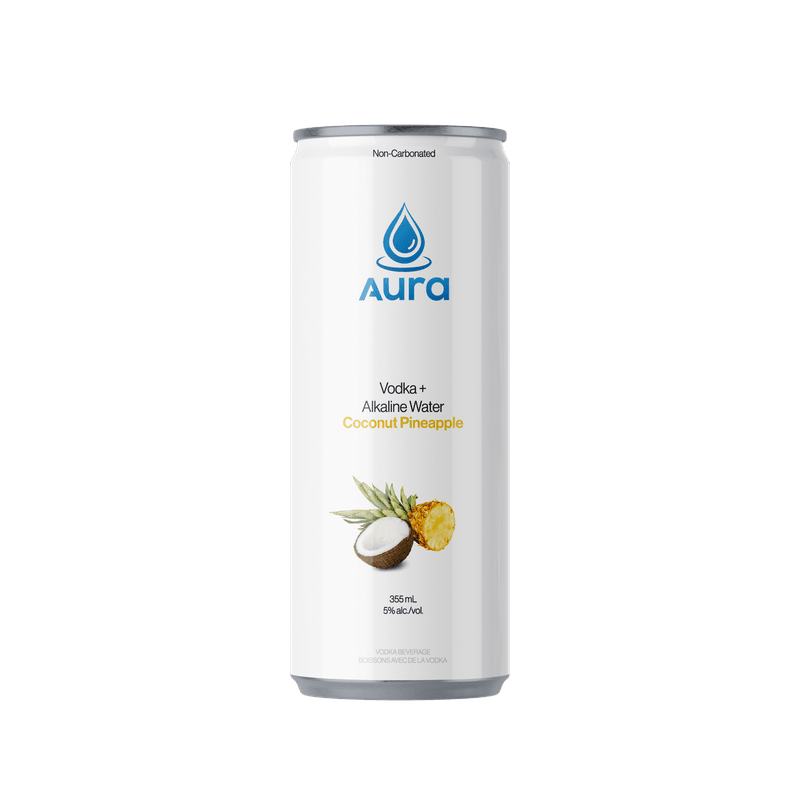
Ordering to an Ontario address? Browse our vodka water cocktails in Cucumber Lime, Coconut Pineapple and Mango Peach. In BC and Alberta, where to buy points you to a licensed shelf nearby. Must be of legal drinking age; please enjoy Aura responsibly.
Sources
- Government of Canada. Importation of Intoxicating Liquors Act, R.S.C. 1985, c. I-3, s. 3 (current to 2026-07-21; amended 2019, c. 29, s. 186). Justice Laws Website. laws-lois.justice.gc.ca/eng/acts/I-3/FullText.html
- Alcohol and Gaming Commission of Ontario. "Section 3: Responsibilities of the Licensee," General Delivery Licence Guide, n.d. agco.ca
- Alcohol and Gaming Commission of Ontario. "Liquor Delivery Service — Regulatory Requirements," n.d. agco.ca
- LCBO. "LCBO Online Ordering: Shipping Address Eligibility," helloLCBO, n.d. hellolcbo.com
- Province of British Columbia, LCRB. Licensee Retail Store Terms and Conditions, May 2026 (delivery section revised 21 August 2024). gov.bc.ca (PDF)
- Province of British Columbia, LCRB. "Bulletin 24-10: Updates to liquor delivery requirements" (21 August 2024). gov.bc.ca
- Province of British Columbia, LCRB. "LCRB frequently asked questions." gov.bc.ca
- Province of Alberta. Gaming, Liquor and Cannabis Regulation, Alta Reg 143/1996, ss. 47(f), 89, 90; office consolidation current as of 18 June 2026. Alberta King's Printer. kings-printer.alberta.ca (PDF)
- Statistics Canada. "Control and sale of alcoholic beverages and cannabis, April 1, 2024 to March 31, 2025," The Daily, 5 March 2026. statcan.gc.ca