Two people order the same drink, same size, same night. One is fine after two; the other feels closer to three. That is not imagination — and it is why health agencies spent decades publishing different alcohol limits men vs women. The useful question is which part of that gap is physiology you can plan around tonight, and which part is a 1990s explanation the evidence has walked back. Short version: the main driver is how much water your body dilutes alcohol into, not how fast your stomach destroys it.
The short answer on alcohol limits men vs women
Alcohol distributes into body water and does not meaningfully dissolve into fat. Two people of identical weight therefore reach different blood alcohol concentrations from the same drink if they differ in water-to-fat proportion — and on average, adult women carry a lower proportion of body water than adult men.
Forensic pharmacology puts numbers on the spread. In 529 adults, Seidl, Jensen and Alt reported that the ratio of body water to blood water — the factor Widmark's blood-alcohol equation turns on — ranged from 0.44 to 0.80 in women and from 0.60 to 0.87 in men (International Journal of Legal Medicine, 2000). Note the overlap: a lean woman can sit above a heavier man. Sex shifts the distribution; it does not create two separate populations.
Why women process alcohol differently — the part that held up
Measure elimination rather than peak concentration and the picture shifts. Kwo and colleagues clamped breath alcohol at 50 mg/dL by intravenous infusion in 10 men and 10 women, with liver volume measured by CT (Gastroenterology, 1998). Mean elimination rate and mean liver volume did not differ significantly between the sexes. Lean body mass was 42% greater in the men — so per kilogram of lean body mass the women cleared alcohol 33% faster, and per unit of liver volume the sex difference vanished entirely.
That inverts the folk explanation. Women in that study did not have slower livers; they had a comparable liver working through the same alcohol, distributed into a smaller water compartment. Lower body water raises the peak — it does not proportionally lengthen clearance.
The first-pass metabolism claim, and where it was revised
You have probably met the gastric-enzyme explanation: women have less alcohol dehydrogenase in the stomach lining, so less alcohol is destroyed before it reaches the bloodstream. That comes from Frezza and colleagues in the New England Journal of Medicine, 1990. In 20 men and 23 women given 0.3 g of ethanol per kilogram of body weight, first-pass metabolism and gastric alcohol dehydrogenase activity in the non-alcoholic women were 23% and 59% of the men's values respectively.
A real finding, still cited — and substantially qualified since. Ammon and colleagues gave six men and six women labelled ethanol intravenously and orally or intraduodenally, and found total first-pass metabolism was small in both groups — 9.1% ± 4.0% in men and 8.4% ± 3.1% in women (Clinical Pharmacology & Therapeutics, 1996). They concluded that under realistic drinking conditions only a minor, gender-independent first-pass metabolism occurs — while still measuring roughly 28% higher dose-corrected blood alcohol exposure in the women. The difference was real; the stomach was not where it came from.
The honest summary: the sex difference in blood alcohol concentration replicates well. The gastric-enzyme mechanism offered to explain it no longer carries the weight it was given, and distribution volume does most of the explanatory work.
Drinking guidelines sex differences: what Canada changed
This is where Canadians get confused, because two sets of numbers are still in circulation. The older low-risk guidelines set sex-specific ceilings: no more than 2 standard drinks a day and 10 per week for women, 3 a day and 15 per week for men, as Health Canada's page describes them.
In January 2023 the Canadian Centre on Substance Use and Addiction published Canada's Guidance on Alcohol and Health, dropping separate weekly thresholds by sex for one continuum of risk: 1–2 drinks a week is low risk, 3–6 moderate, 7 or more increasingly high risk, and more than 2 standard drinks on any single occasion raises the risk of injury and other acute harms. CCSA's reasoning is that at low and moderate levels both sexes experience harms — the type differs, but neither is spared.
That is not a claim that the physiology above is fake. It is a claim about what a population guideline is for: a single continuum reflects long-term disease risk, where the evidence did not support two ceilings. Body water still governs how a given evening feels — a per-occasion question.
Count in standard drinks, not containers
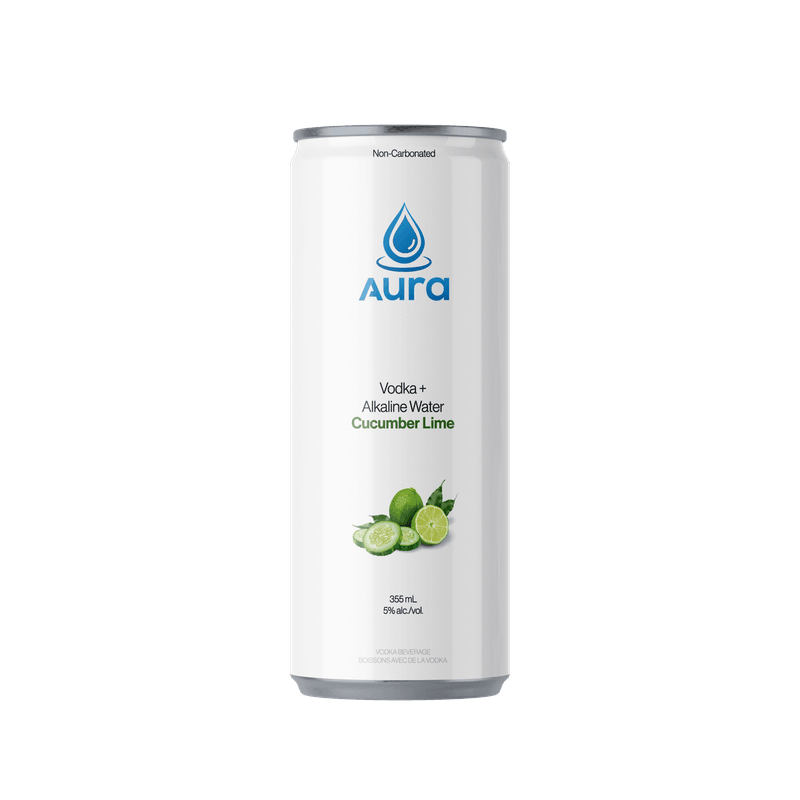
A Canadian standard drink is 17.05 mL, or 13.45 g, of pure alcohol — a 341 mL bottle of 5% beer, 142 mL of 12% wine, or 43 mL of 40% spirits. Do the arithmetic: volume in mL × ABV% ÷ 17.05 = standard drinks. A 355 mL can at 5% ABV holds 17.75 mL of alcohol — about 1.04 standard drinks. Check the ABV printed on what you are holding; two cans of the same size are not necessarily the same drink.
Statistics Canada's 2023 Canadian Community Health Survey, released October 2, 2024, found 20% of men and 11% of women reported seven or more drinks in the previous week; 54% of adults reported none.
What to do with this today
- Know your can. Convert to standard drinks before you start, not after.
- Use the per-occasion number. CCSA's "more than 2 on one occasion" applies to everyone and is the one that fits a night out.
- Pace to the peak, not the total. The same drinks over more hours produce a lower peak.
- Eat first, and alternate with water. Both slow the climb.
- Don't calibrate off the person beside you. Their distribution volume isn't yours, regardless of sex.
Caveats and what the research does not show
- The samples are small. Kwo used 20 people; Ammon used 12. These are careful, invasive, controlled studies — but small pharmacokinetic samples do not settle every question.
- The mechanism is contested, not the observation. Frezza and Ammon disagree on where first-pass metabolism happens and how much it matters; both found a sex difference in blood alcohol exposure.
- Averages hide overlap. The distribution ranges above overlap substantially. Sex is a weak predictor for any one person.
- These are metabolism studies, not outcome studies. They say nothing about your personal risk of liver disease, cancer or dependence.
- None of this makes any drink safe. CCSA is explicit that less is better at every point on the continuum.
Where Aura fits — and where it doesn't
Aura is a canned vodka water: premium distilled vodka, alkaline water at pH 8.5+, natural flavour, no added sugar, no artificial sweeteners, no preservatives. It is a still drink — zero carbonation, no bubbles, no fizz — a format and taste difference, not a health one. The alcohol in a can of our vodka water cocktails is the same alcohol as anything else on the table and counts identically in the arithmetic above; nothing here suggests Aura is safer, healthier or less intoxicating than any drink of equivalent strength. What a can gives you is a fixed, printed, countable volume — more than a free-poured glass of wine offers. Why Aura covers what goes in and what stays out.
Ready to try it? Aura's direct and wholesale ordering delivers to Ontario addresses only; in Alberta and British Columbia, find us through where to buy — AGLC-licensed private retailers in Alberta, BC Liquor Stores and licensed private retailers in BC. Please enjoy responsibly, and only if you are of legal drinking age in your province.
This article summarises published research for general interest and is not medical advice. If you have questions about your own drinking, speak with a healthcare professional.
Sources
- Frezza M, di Padova C, Pozzato G, Terpin M, Baraona E, Lieber CS. "High blood alcohol levels in women. The role of decreased gastric alcohol dehydrogenase activity and first-pass metabolism." New England Journal of Medicine, 1990;322(2):95–99. PMID 2248624. pubmed.ncbi.nlm.nih.gov/2248624
- Ammon E, Schäfer C, Hofmann U, Klotz U. "Disposition and first-pass metabolism of ethanol in humans: is it gastric or hepatic and does it depend on gender?" Clinical Pharmacology & Therapeutics, 1996;59(5):503–513. PMID 8646821. pubmed.ncbi.nlm.nih.gov/8646821
- Kwo PY, Ramchandani VA, O'Connor S, Amann D, Carr LG, Sandrasegaran K, Kopecky KK, Li TK. "Gender differences in alcohol metabolism: relationship to liver volume and effect of adjusting for body mass." Gastroenterology, 1998;115(6):1552–1557. PMID 9834284. pubmed.ncbi.nlm.nih.gov/9834284
- Seidl S, Jensen U, Alt A. "The calculation of blood ethanol concentrations in males and females." International Journal of Legal Medicine, 2000;114(1–2):71–77. PMID 11197633. pubmed.ncbi.nlm.nih.gov/11197633
- Canadian Centre on Substance Use and Addiction. "Canada's Guidance on Alcohol and Health." CCSA, January 2023. ccsa.ca/en/canadas-guidance-alcohol-and-health
- Health Canada. "Low-risk alcohol drinking guidelines." Government of Canada. canada.ca — low-risk alcohol drinking guidelines
- Statistics Canada. "A snapshot of alcohol consumption levels in Canada," The Daily, October 2, 2024 (Canadian Community Health Survey, 2023). statcan.gc.ca — The Daily, 2024-10-02