You had three or four drinks last night. You got to bed at a reasonable hour, you woke up without a headache, and if anyone asked you'd say you feel fine. Then it's 9 a.m., you're reading the same paragraph for the third time, and you're a half-second late on everything. That gap between "I feel fine" and "I am not sharp" is exactly what the alcohol next day cognitive research is about — and the evidence says the gap is real, measurable, and largely independent of whether you'd call it a hangover.
The short version before the details: controlled and naturalistic studies consistently show slower reaction time, weaker memory recall and reduced sustained attention the morning after drinking, measured at points when blood alcohol has already returned to zero. The effect sizes are moderate — not catastrophic, not nothing. Executive function is the murkiest area, with several studies finding no effect at all. Here is what the evidence supports, what it doesn't, and what you can actually change tonight.
What alcohol next day cognitive research actually measures
The research window is narrow and specific. Investigators define the hangover period as the mental and physical symptoms experienced the day after a single episode of heavy drinking, beginning when blood alcohol concentration (BAC) approaches zero. To rule out residual intoxication, the standard methodological requirement is that participants test at a BAC below 0.02%. Anything measured at that point is a genuine after-effect, not leftover alcohol in the bloodstream.
That distinction matters for the question most people are actually asking. You are not slow at 9 a.m. because there is still alcohol in you. You are slow because of what the alcohol did to the eight hours before.
The numbers: reaction time, memory and attention the morning after
The most useful single reference is the systematic review by Gunn and colleagues, published in Addiction in 2018. They screened experimental studies going back to 1970 and pooled 1,163 participants across 19 studies, with 11 studies supplying enough data for meta-analysis. The pooled effects for hangover cognitive impairment, expressed as Hedges' g:
- Psychomotor speed: g = 0.66 (95% CI 0.31–1.00, p < 0.001)
- Short-term memory: g = 0.64 (95% CI 0.15–1.13, p = 0.01)
- Long-term memory: g = 0.59 (95% CI 0.01–1.17, p = 0.05)
- Sustained attention: g = 0.47 (95% CI 0.07–0.87, p = 0.02)
- Divided attention: no evidence of an effect
Those are moderate effects — the kind you would not notice in a mirror but would notice in a spreadsheet. The same review reported that vehicle control was impaired in driving studies, while finding no clear evidence of a next-day effect on driving speed. Executive-function tasks such as problem-solving and managerial decision-making came out non-significant.
A naturalistic morning after performance study
For a morning after performance study run outside the lab, Devenney, Coyle and Verster (2019) tested 43 adults (23 men, 20 women, mean age 31.4) recruited from an ordinary night out in Ireland. Participants drank a mean of 15.4 UK units — a heavy night, not a couple of drinks. The next morning, compared with their own alcohol-free control day:
- Choice reaction time slowed from 301.4 ms to 321.9 ms (p < 0.001, d = 0.61)
- Free recall fell from 9.5 words to 7.5 (p < 0.001, d = 0.60)
- Spatial working memory errors rose from 15.0 to 20.6 (p = 0.03, d = 0.35)
- Stroop incongruent responses slowed from 1,447.0 ms to 1,588.6 ms (p = 0.03, d = 0.35)
One test showed no impairment at all: intra-extra dimensional set shifting, a measure of cognitive flexibility. Even in a study where nearly everything else slowed, that particular executive function held.
"No hangover" does not mean "no cost"
Mackus and colleagues (2023, Journal of Clinical Medicine) split 29 volunteers into 14 self-identified hangover-resistant drinkers and 15 hangover-sensitive drinkers, then tracked 23 symptoms hourly from 09:30 to 15:30 after both a drinking evening and an alcohol-free control day. Both groups drank comparably heavily — a mean of 13.5 versus 12.4 drinks, estimated peak BAC 0.21% versus 0.20%.
The resistant group mostly lived up to the label. Overall hangover severity, headache, nausea, stomach pain, confusion, sweating, heart pounding, anxiety and sound sensitivity were all statistically indistinguishable from their control day. But not everything was: fatigue was significantly elevated at 10:30, Karolinska Sleepiness Scale scores were significantly elevated at 10:30, and vigor was significantly reduced at 09:30, 10:30 and 11:30. People who genuinely do not get hangovers still woke up flatter and sleepier. That study measured symptoms rather than cognitive tests, so it does not prove those people were cognitively impaired — but it does undercut the assumption that a missing headache means a clean slate.
How it compares to sleep loss
Sleep loss is the benchmark most people reach for, and there is a well-known calibration study. Williamson and Feyer (2000), in Occupational and Environmental Medicine, put 39 people — 30 transport-industry employees and 9 army personnel — through 28 hours of sleep deprivation and, separately, through measured alcohol doses up to roughly 0.1% BAC. After 17 to 19 hours awake, performance on several tests was equivalent to or worse than at 0.05% BAC, with response speeds up to 50% slower on some measures.
Handle the comparison carefully, though. Williamson and Feyer benchmarked sleep loss against acute intoxication, not against the morning after. None of the studies here directly pit "drank last night" against "stayed up four hours too late," so anyone who tells you a hangover equals a precise number of hours of lost sleep is extrapolating well past the data.
The sleep mechanism is also less tidy than the popular version. Strüven and colleagues (2025, Nutrients) tracked 40 healthy adults across nine days — three baseline, three with moderate alcohol (40 g/day for women, 60 g/day for men), three after. Nocturnal resting heart rate rose significantly, from 63.6 to 66.6 bpm (p < 0.001), perceived night-time awakenings increased (p < 0.001) and the sense of restorative sleep declined (p = 0.017). Yet objective sleep architecture barely moved: light sleep (p = 0.339), deep sleep (p = 0.116), sleep latency and awakening counts all showed no significant change. The authors note plainly that their consumer smartwatches cannot track REM sleep and lag polysomnography for staging — so absence of evidence here is not strong evidence of absence.
What you can actually do today
- Move the hard thinking. The consistent finding is slowed psychomotor speed and weaker recall in the morning. If you drank last night, push memory-heavy or reaction-critical work to the afternoon and put admin in the 9 a.m. slot.
- Be conservative about driving. Gunn's review found next-day impairment specifically in vehicle control. Legal sobriety and full capability are not the same thing.
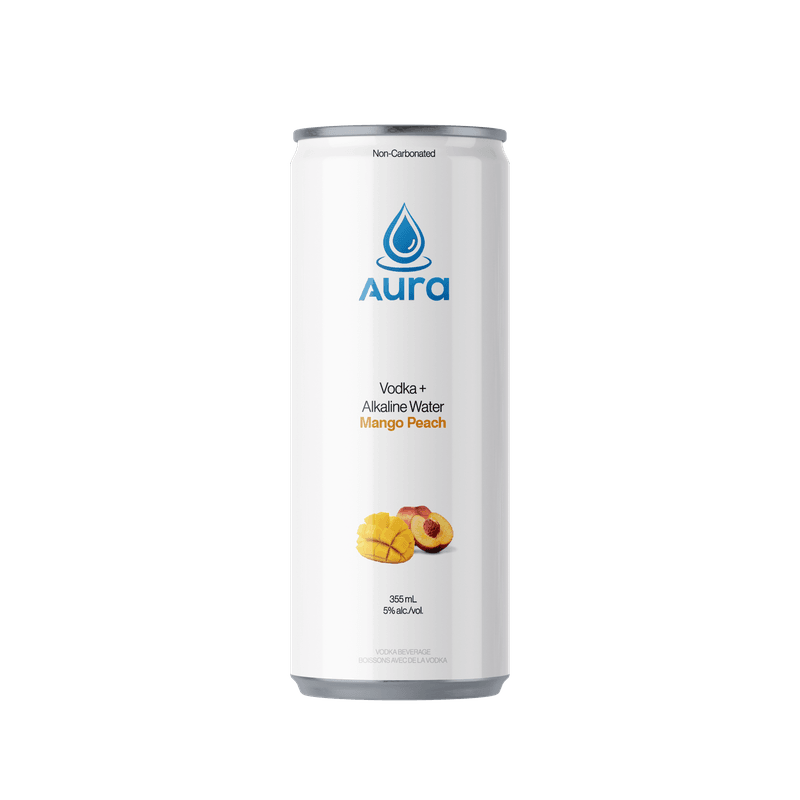
- Count in fixed servings. Free-poured drinks make your own dose estimate unreliable, which is how a "few drinks" becomes eight. A sealed 355 mL can is one known, countable serving.
- Protect the sleep opportunity, not just the drink count. Stacking a five-hour night on top of a drinking night compounds two separately documented sources of impairment.
- Finish earlier in the evening. This buys more hours between your last drink and your alarm. It is a reasonable inference from the timing data, not a proven cognitive fix.
- Use the Canadian numbers. Canada's Guidance on Alcohol and Health (CCSA, 2023) sets a continuum of risk: 1–2 drinks a week is low risk, 3–6 moderate, 7 or more increasingly high — and more than 2 standard drinks on any single occasion raises the risk of harm to yourself and others.
The caveats, stated honestly
- Heterogeneity is high. I² values in the Gunn meta-analysis ranged from 36% to 84% (short-term memory 73%, long-term memory 84%), meaning study results varied a lot. Some included samples were as small as 5–12 people, none of the studies were pre-registered, and the authors flagged all of them as carrying reporting-bias risk.
- Executive function is unresolved. Problem-solving and decision-making tasks were non-significant in the meta-analysis, and set shifting was unimpaired in Devenney's sample. "Your executive function is wrecked" overstates the evidence.
- Testing conditions were imperfect. Devenney's participants were tested anywhere from 10:30 a.m. to 3 p.m. because of pub hours, which confounds time-of-day effects on cognition.
- The doses were heavy. These studies used 12–15 drinks in a night. They do not establish what two drinks does to your Tuesday morning.
- No product changes the pharmacology. Nothing in this literature supports the idea that a particular format, flavour or brand of alcohol produces less next-day impairment.
Where Aura fits — and where it doesn't
Aura is a canned vodka water made in Canada: premium distilled vodka, alkaline water at pH 8.5+ and natural flavour, in Cucumber Lime, Coconut Pineapple and Mango Peach. It is completely still — no carbonation, no bubbles, no fizz — so it isn't a seltzer and isn't a vodka soda. If you're shopping for a better mornings vodka option, be precise about what that can honestly mean. Nothing on this page claims Aura is healthier, safer or less intoxicating than anything else at the same dose; the same ethanol is in the can either way. What a sealed 355 mL can does give you is a fixed, countable serving with no added sugar, no artificial sweeteners and no preservatives, and it's gluten-free. The formulation reasoning is laid out on why Aura.
Browse our vodka water cocktails — 355 mL cans, sold by the case of 24, with our own direct and wholesale ordering delivering to Ontario addresses. In Alberta, look for Aura at AGLC-licensed private retailers; in British Columbia, at BC Liquor Stores and licensed private retailers. Where to buy has the current list. Please enjoy responsibly, and only if you are of legal drinking age in your province.
This article summarises published research for general interest and is not medical advice.
Sources
- Gunn C, Mackus M, Griffin C, Munafò MR, Adams S. A systematic review of the next-day effects of heavy alcohol consumption on cognitive performance. Addiction. 2018;113(12):2182–2193. doi:10.1111/add.14404. PMID: 30144191. Full text
- Devenney LE, Coyle KB, Verster JC. Cognitive performance and mood after a normal night of drinking: A naturalistic alcohol hangover study in a non-student sample. Addictive Behaviors Reports. 2019;10:100197. doi:10.1016/j.abrep.2019.100197. PMID: 31297435. Full text
- Mackus M, van de Loo AJAE, van Neer RHP, et al. Differences in next-day adverse effects and impact on mood of an evening of heavy alcohol consumption between hangover-sensitive drinkers and hangover-resistant drinkers. Journal of Clinical Medicine. 2023;12(6):2090. doi:10.3390/jcm12062090. PMID: 36983093. Full text
- Williamson AM, Feyer AM. Moderate sleep deprivation produces impairments in cognitive and motor performance equivalent to legally prescribed levels of alcohol intoxication. Occupational and Environmental Medicine. 2000;57(10):649–655. PMID: 10984335. Full text
- Strüven A, Schlichtiger J, Hoppe JM, et al. The impact of alcohol on sleep physiology: a prospective observational study on nocturnal resting heart rate using smartwatch technology. Nutrients. 2025;17(9):1470. doi:10.3390/nu17091470. PMID: 40362779. Full text
- Canadian Centre on Substance Use and Addiction. Canada's Guidance on Alcohol and Health. Ottawa: CCSA; 2023. ccsa.ca