You've had three drinks over two hours. You feel clear, steady, entirely in control. Then someone asks whether you're fine to drive. Decades of alcohol tolerance research point to an uncomfortable answer: the feeling you're consulting is the least reliable instrument in the room — and on some measures it gets less reliable as the night goes on.
The short version is that tolerance isn't one thing. It's at least three separate processes, they run on different clocks, and only one of them has much to do with how impaired you actually are. Here's what the published evidence supports, what it doesn't, and what you can do with it tonight.
What alcohol tolerance research actually measures
Researchers split tolerance into categories because the body adapts in genuinely different ways.
Metabolic tolerance: the liver gets faster
In his review of alcohol metabolism in Clinics in Liver Disease, Arthur Cederbaum notes that people with heavy chronic alcohol use — in the absence of liver disease — often show an increased rate of blood ethanol clearance, and that levels of the liver enzyme CYP2E1 are increased by chronic ethanol exposure (Cederbaum, 2012). Faster clearance means alcohol spends less time in circulation. It does not mean it does less while it's there.
Functional tolerance: the brain adapts
Functional tolerance alcohol researchers also call pharmacodynamic tolerance: the nervous system adjusts so that the same blood alcohol concentration produces a smaller effect. Elvig and colleagues, in Pharmacology Biochemistry and Behavior, describe this as cellular neuroadaptation — receptor desensitisation, internalisation and transcriptional change (Elvig et al., 2021). Strikingly, much of it appears to be learned. In the rodent work they summarise, rats given a single dose of alcohol showed tolerance to its motor-impairing effects 8–24 hours later only if they practised the task while intoxicated; without that intoxicated practice, tolerance did not develop at all. Blocking protein synthesis with anisomycin also prevented it.
Acute tolerance: it happens within one night
Acute tolerance is a change in response to alcohol within a single drinking session, at the same blood alcohol level. It's usually called the Mellanby effect, after Edward Mellanby's 1919 dog experiments, in which visible intoxication appeared as blood alcohol was rising but had largely vanished by the time the same concentration was reached on the way down.
Impairment vs feeling drunk: what the data say
Michael Holland and Robin Ferner systematically reviewed this question in Clinical Toxicology, screening 386 articles and analysing the 26 human studies that reported data on both the rising and falling limbs of the blood alcohol curve, covering 770 subjects (Holland & Ferner, 2017). Their findings split cleanly in two.
What improves is how you feel. Across 19 trials involving 229 subjects, participants rated themselves less intoxicated on the descending limb than at the same concentration on the ascending limb; the result was statistically significant in 12 of those trials, and in the 9 trials with usable numbers the weighted mean difference was 29% (range 24–74%). Willingness to drive rose significantly in 4 of 6 trials, with a weighted mean increase of 207% among the 52 subjects with numerical data — roughly three times as willing to drive.
What doesn't improve is performance. Across 200 trials in 57 subjects, measures of driving ability were worse on the descending limb by a weighted mean of 96%. In three trials of inhibitory control — cued go/no-go tasks, the ability to stop a response you've already started — performance was 30% worse (range 14–65%) on the way down. That is the whole problem in one sentence: the belief that you're less intoxicated is contradicted by a continued decline in the skills that keep you safe.
What changes with regular drinking
Regular heavy drinking appears to change which parts of you recover. Fillmore and Weafer tested 40 adults aged 21–31 — 20 at-risk binge drinkers and 20 non-risk moderate drinkers — after a 0.65 g/kg dose, at closely matched blood alcohol levels on each limb (54.9 vs 57.8 mg/100 mL) (Fillmore & Weafer, 2012).
Both groups felt markedly less drunk on the descending limb (dose × limb interaction F(1,38) = 13.7, p < .001; d = 1.29–1.30). But only the at-risk drinkers regained motor coordination (group × dose interaction F(1,38) = 6.7, p = .013; within-group t(19) = 3.6, p = .002, d = 0.81); the moderate drinkers showed no significant recovery. And neither group recovered response inhibition — impairment persisted on both limbs (F(1,38) = 16.9, p < .001). In other words, experience may buy back your hands. It did not buy back your brakes.
The limits of this evidence
This literature is far weaker than its popularity suggests, and it's worth being honest about that:
- The studies are small. Holland and Ferner report a median of about 10 subjects per group, and heterogeneity was severe enough that no meta-analysis could be performed — the figures above are weighted summaries, not pooled effect sizes.
- Findings contradict each other. Some objective measures did improve on the descending limb in some studies: a maze task by 11%, a pegboard task by 71%, arithmetic by 10–18%. Results across domains were inconsistent.
- The mechanism is in doubt. In studies that clamped blood alcohol at a constant level, acute tolerance to subjective intoxication failed to appear — suggesting the effect may track the direction of change in blood alcohol rather than true tolerance to alcohol.
- Samples were narrow: often young white men, frequently university students, and for safety reasons usually tested near 80 mg/dL. Nothing here tells you what happens at much higher concentrations.
- Fillmore and Weafer's design is cross-sectional; the authors state it cannot show whether heavy drinking caused the tolerance or reduced sensitivity preceded the drinking. Elvig and colleagues note that most mechanistic work is preclinical and that few studies analysed sex differences at all.
What to do with this tonight
- Count in standard drinks, not cans or glasses. In Canada, one standard drink is 17.05 mL (13.45 g) of pure alcohol — a 341 mL beer, cider or ready-to-drink at 5%, 142 mL of 12% wine, or 43 mL of 40% spirits (CCSA, 2023). For anything else: mL × ABV% ÷ 1705 = standard drinks. A 355 mL can is a little larger than that 341 mL reference, so check the label.
- Decide before the first drink, not after the third. Canada's guidance puts weekly risk on a continuum — low at 2 standard drinks or fewer, moderate at 3–6, increasingly high at 7 or more — and flags more than 2 per occasion as a significant increase in risk of injury and harm. Pick your number in advance, while you still have the judgement to pick it.
- Treat the hours after your last drink as the risky ones. That's the window where you feel most fine and, on the driving measures reviewed above, perform worst.
- Zero when it counts. Canada's guidance lists driving, using machinery and tools, taking interacting medications, dangerous physical activity, being responsible for others, and making important decisions as circumstances where no alcohol is safest.
- Distrust the specific feeling of "I'm handling it well." That self-report is precisely the measure the research shows adapts fastest.
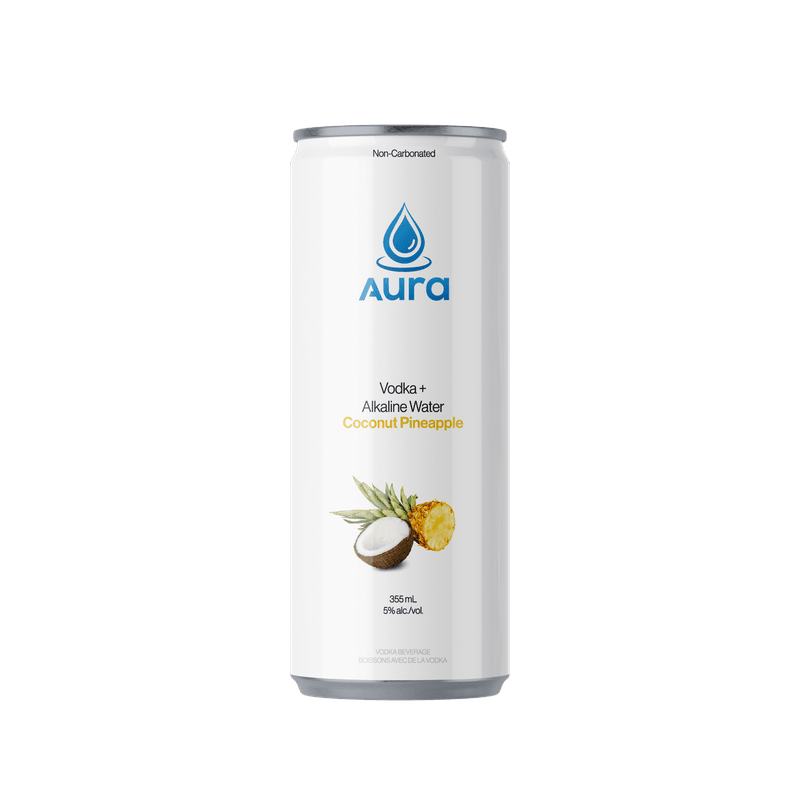
One thing this research does not say: that any format of drink is safer. Aura is a still, non-carbonated vodka water with no added sugar and no artificial sweeteners, and the fact that there are no bubbles changes nothing about the alcohol. A standard drink of vodka in a can is a standard drink of vodka. If you drink slower because a still cocktail is easier to sip, that's a pacing habit, not a health benefit.
Drink deliberately
If you're going to drink, drink like someone who knows the difference between feeling sober and being sober: count your standard drinks, set the number first, and never let the descending limb make your transport decisions for you. Explore our vodka water cocktails, read why Aura is made still rather than sparkling, and find your nearest stockist across British Columbia, Alberta and Ontario at where to buy. Please enjoy responsibly, and only if you are of legal drinking age in your province.
This article summarises published research for general interest and is not medical advice. If you have questions about your own drinking, speak to a healthcare professional.
Sources
- Holland, M., & Ferner, R. (2017). A systematic review of the evidence for acute tolerance to alcohol — the "Mellanby effect." Clinical Toxicology, 55(6). DOI: 10.1080/15563650.2017.1296576. Open-access manuscript
- Fillmore, M. T., & Weafer, J. (2012). Acute tolerance to alcohol in at-risk binge drinkers. Psychology of Addictive Behaviors, 26(4), 693–702. PMID: 22023021; PMCID: PMC3326440; DOI: 10.1037/a0026110. Full text
- Elvig, S. K., McGinn, M. A., Smith, C., Arends, M. A., Koob, G. F., & Vendruscolo, L. F. (2021). Tolerance to alcohol: A critical yet understudied factor in alcohol addiction. Pharmacology Biochemistry and Behavior, 204, 173155. PMID: 33631255; PMCID: PMC8917511; DOI: 10.1016/j.pbb.2021.173155. Full text
- Cederbaum, A. I. (2012). Alcohol metabolism. Clinics in Liver Disease, 16(4), 667–685. PMCID: PMC3484320; DOI: 10.1016/j.cld.2012.08.002. Full text
- Paradis, C., Butt, P., Shield, K., Poole, N., Wells, S., Naimi, T., Sherk, A., & the Low-Risk Alcohol Drinking Guidelines Scientific Expert Panels. (2023). Canada's Guidance on Alcohol and Health: Final Report. Ottawa, Ont.: Canadian Centre on Substance Use and Addiction. ISBN 978-1-77871-046-9. Full report (PDF)