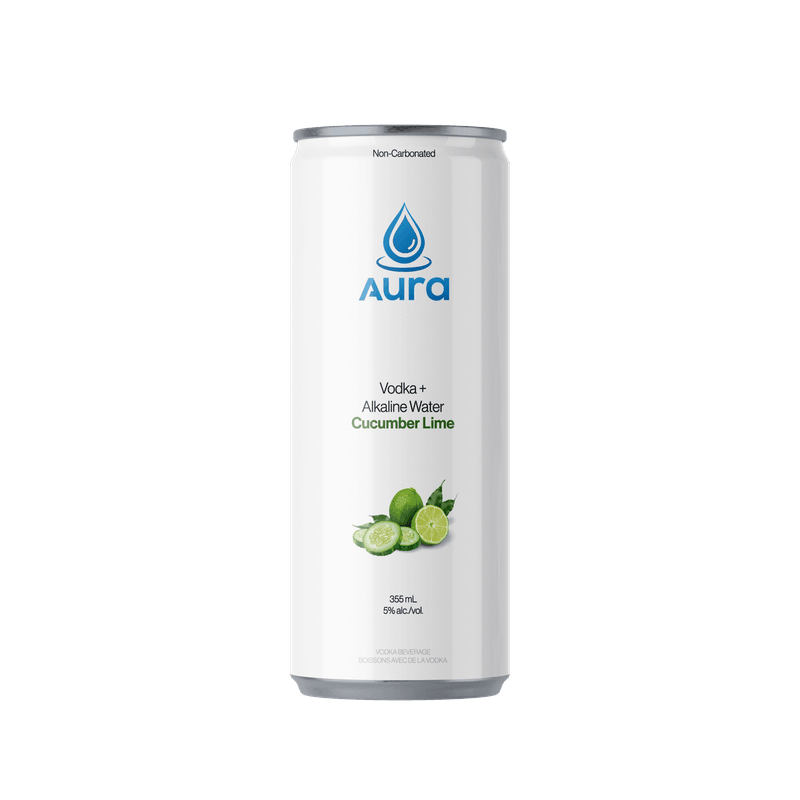
You are holding a can, and it will not answer the one question you actually have: how much alcohol is in this, and how many of these add up to a week's worth? In Canada, most drink labels give you a volume and a percentage and very little else — no calories, no ingredient list, no standard-drink count, no health information. The body of alcohol warning labels research Canada has produced since 2017 was built to measure exactly that gap, and the findings are more mixed than either side of the debate usually admits.
Here is the short answer for today: you can calculate standard drinks yourself from two numbers already printed on almost every container, and you should, because nothing else on the package will do it for you. The longer answer — what the evidence shows, what it doesn't, and what is about to change — follows.
What alcohol warning labels research Canada has produced actually found
The largest Canadian field test ran in Whitehorse, Yukon, with Yellowknife, Northwest Territories as a comparison site. Before any labels went up, Vallance and colleagues surveyed 836 liquor store patrons and found the baseline knowledge was thin: 24.5% knew alcohol can cause cancer, 29.5% could correctly calculate a standard drink, and roughly half knew the daily (49.5%) or weekly (48.2%) guideline limits. Support for labels was moderate — 55.9% for a health warning, 51.4% for standard drink information, 38.7% for drinking-guideline labels.
Then the labels went on. In the follow-up cohort of 2,049 participants, Hobin and colleagues reported that two months after a cancer warning label was applied, unprompted recall rose 24.2 percentage points in Whitehorse versus 0.6 in the comparison site (adjusted odds ratio 32.7, 95% CI 5.4–197.7), and prompted recall rose 35.7 versus 4.1 points (AOR 6.2, 95% CI 3.6–10.9). People noticed. But the knowledge result is the part worth sitting with: the increase in knowing that alcohol can cause cancer was 12.1 points in the intervention site versus 11.6 in the comparison site (AOR 1.1, 95% CI 0.7–1.5) — a confidence interval that crosses 1, meaning the study did not demonstrate a difference between sites on knowledge itself.
Standard drink labels tell a similar two-sided story. In the Yukon standard-drink label study, exposure raised recall (AOR 5.69, 95% CI 3.02–10.71) and support for the labels (AOR 1.49, 95% CI 1.04–2.12), and lowered the odds of using the information to shop for high-strength, low-cost alcohol (AOR 0.65, 95% CI 0.45–0.93). Yet accuracy in estimating the number of standard drinks in a container barely moved (AOR 1.06, 95% CI 0.59–1.93), and neither did using the labels to drink within guidelines (AOR 1.04, 95% CI 0.75–1.46). Noticing a label is not the same as being able to use it.
On consumption, the Canadian Centre on Substance Use and Addiction reports a 6.6% decrease in sales of labelled products during the Yukon intervention. That number carries an asterisk: as Giesbrecht and colleagues describe in the Canadian Journal of Public Health, industry legal threats forced the cancer message off the bottles after roughly one month, cutting the experiment short.
How to read a drink label: the 60-second method
Until labels change, do the arithmetic yourself. Canada's Guidance on Alcohol and Health defines a standard drink as 17.05 mL, or 13.45 grams, of pure alcohol — the amount in a 341 mL bottle of 5% beer, a 142 mL glass of 12% wine, or a 43 mL shot of 40% spirits.
- Find two numbers on the can: the net volume in millilitres and the alcohol by volume percentage. Both are required on Canadian labels.
- Multiply and divide: volume × %ABV ÷ 17.05 = standard drinks. A 355 mL can at 5% ABV works out to 17.75 mL of alcohol, or about 1.04 standard drinks.
- Check the container, not the serving: a tall can, a 473 mL format or a shared bottle can hide two or three standard drinks behind one "one drink" mental label.
- Do not expect calories or ingredients. If they are absent, that is legal, not an oversight — see below.
- Write the number down. The Yukon data suggest recall improves easily and arithmetic does not; a note on your phone beats memory.
Then compare against the guidance. Canada's Guidance on Alcohol and Health (2023) frames risk as a continuum: 1–2 standard drinks a week is low risk, 3–6 is moderate, and 7 or more carries increasingly high risk, with a further recommendation of no more than 2 on any single occasion.
Nutrition labelling alcohol: why the can says so little
The blank space is structural. Beverages containing more than 0.5% alcohol by volume are conditionally exempt from the Nutrition Facts table and, under the amendments published as SOR/2022-168, from the front-of-package nutrition symbol as well. As the LCBO's supplier guidance explains, that exemption can be lost — a product making a permitted nutrient content claim must then carry a Nutrition Facts table and, if thresholds are met, the front-of-package symbol. The transition period for those rules ran to December 31, 2025, so from 2026 most prepackaged foods in Canada carry the symbol while most alcohol still does not.
The CCSA labelling evidence on this specific question is honest about its own limits. In a systematic review of 62 articles covering 54 primary studies, Hobin and colleagues found that nutrition labels improve people's ability to estimate the calorie content of alcoholic drinks and enjoy strong public support — but that evidence for effects on purchase or consumption intentions is inconsistent, and evidence on actual consumption is insufficient. At the time of the review, no real-world evaluation of alcohol container nutrition labels had been published anywhere.
What the evidence does not show
A fair reading has to include the weak points, and there are several.
- The Yukon work was a quasi-experiment in a single small city, not a randomised trial. Survey response rates were 8.9% and 8.0%, and cohort retention fell to 47.5% by the third wave.
- The cancer label — the strongest message tested — was on shelves for about a month before it was pulled, so the long-run effect is genuinely unknown.
- Effects on the outcomes that matter most (accurate standard-drink estimation, drinking within guidelines) were null.
- The CCSA review notes it was limited to English-language, peer-reviewed studies, that most evidence comes from online or lab settings rather than real stores, and that nearly half of the studies sampled adolescents, students or young adults.
And one thing this research emphatically does not show: that any particular product is safer. A still drink is not a lower-risk drink. The cans in our vodka water cocktails range hold the same ethanol as anything else at the same ABV, and the absence of carbonation is a comfort and taste difference, not a health, safety or intoxication difference. Clearer labels help you count. They do not change what you are counting.
What is changing
Federally, the vehicle to watch is Bill S-202, An Act to amend the Food and Drugs Act (warning label on alcoholic beverages), sponsored by Senator Patrick Brazeau. It received first reading on May 28, 2025 and reached third reading debate in the Senate on June 2, 2026; it has not yet gone to the House of Commons. Its predecessor, S-254, died on the order paper. Nothing is law yet, and label rules will not change on shelves this year.
Public opinion is running ahead of the legislation. CCSA cites Health Canada survey work from 2024 in which 62% of respondents supported including standard drink counts, 60% supported risk-reduction guidance, 59% felt alcohol should not be exempt from the labelling requirements applied to tobacco and cannabis, and 55% supported health warnings. In the meantime, some producers disclose voluntarily — checking a brand's own site is often faster than squinting at the can.
That is the practical case for reading past the packaging. Aura publishes what is in the can because there is no rule forcing anyone to: premium distilled vodka, alkaline water at pH 8.5 or above, and natural flavour, with no added sugar, no artificial sweeteners and no preservatives, gluten-free, in 355 mL cans across Cucumber Lime, Coconut Pineapple and Mango Peach. It is a still vodka water — no carbonation at all — which is a flavour and comfort choice, not a health claim. You can read the full formulation rationale on why Aura.
Ready to try it? Direct and wholesale ordering from Aura delivers to Ontario addresses only. In British Columbia and Alberta, find us through BC Liquor Stores and licensed private retailers, or AGLC-licensed private retailers in Alberta — start at where to buy. Please enjoy responsibly, and only if you are of legal drinking age in your province.
This article summarises published research for general interest and is not medical advice.
Sources
- Vallance, K., Stockwell, T., Zhao, J., Shokar, S., Schoueri-Mychasiw, N., Hammond, D., Greenfield, T.K., McGavock, J., Weerasinghe, A., & Hobin, E. (2020). Baseline Assessment of Alcohol-Related Knowledge of and Support for Alcohol Warning Labels Among Alcohol Consumers in Northern Canada and Associations With Key Sociodemographic Characteristics. Journal of Studies on Alcohol and Drugs, 81(2), 238–248. DOI: 10.15288/jsad.2020.81.238. PMCID: PMC7201212. Read it
- Hobin, E., Weerasinghe, A., Vallance, K., Hammond, D., McGavock, J., Greenfield, T.K., Schoueri-Mychasiw, N., Paradis, C., & Stockwell, T. (2020). Testing Alcohol Labels as a Tool to Communicate Cancer Risk to Drinkers: A Real-World Quasi-Experimental Study. Journal of Studies on Alcohol and Drugs, 81(2), 249–261. DOI: 10.15288/jsad.2020.81.249. PMCID: PMC7201213. Read it
- Schoueri-Mychasiw, N., Weerasinghe, A., Stockwell, T., Vallance, K., Hammond, D., Greenfield, T.K., McGavock, J., & Hobin, E. Use as directed: do standard drink labels on alcohol containers help consumers drink (ir)responsibly? Real-world evidence from a quasi-experimental study in Yukon, Canada. Drug and Alcohol Review, 40(2), 247–257 (published online 19 October 2020). DOI: 10.1111/dar.13165. PMID: 33078447; PMCID: PMC8550267. Read it
- Giesbrecht, N., Wettlaufer, A., Vallance, K., Hobin, E., Naimi, T., Price, T., & Stockwell, T. (2023). Why Canadians deserve to have mandated health and standard drink information labels on alcohol containers. Canadian Journal of Public Health, 114(6), 973–978. DOI: 10.17269/s41997-023-00786-1. PMID: 37337118; PMCID: PMC10661542. Read it
- Hobin, E., Jansen, R., Vanderlee, L., & Berenbaum, E. (2022). Enhanced Alcohol Container Labels: A Systematic Review. Ottawa, ON: Canadian Centre on Substance Use and Addiction. ISBN 978-1-77178-855-7. Read it (PDF)
- Paradis, C., Butt, P., Shield, K., Poole, N., Wells, S., Naimi, T., Sherk, A., & the Low-Risk Alcohol Drinking Guidelines Scientific Expert Panels. (2023). Canada's Guidance on Alcohol and Health: Final Report. Ottawa, ON: Canadian Centre on Substance Use and Addiction. Read it (PDF)
- Canadian Centre on Substance Use and Addiction. Alcohol Warning Labels: Evidence and Public Health Impact. Read it
- Parliament of Canada, LEGISinfo. Bill S-202 (45-1): An Act to amend the Food and Drugs Act (warning label on alcoholic beverages). First reading 28 May 2025. Read it
- LCBO. Front-of-Package nutrition labelling and other labelling updates (SOR/2022-168). Read it