Are cans recyclable in Canada? Yes, and aluminium is one of the most valuable things you can put back into the system. People search "are cans recyclable Canada" because the rules, and the results, change by province. Some provinces put a refundable deposit on every can. Others leave most cans to curbside blue boxes. That one difference shows up in the published numbers, which this post goes through below. It also covers what happens to a can after you return it and how much recycled aluminium ends up in new cans.
So, are cans recyclable Canada-wide? What to do today
- Empty it, leave it uncrushed if it's going back for a deposit, and keep the label readable. Depots and retailers have to identify the container before they refund it.
- Check your receipt for a deposit line. If you paid one, you only get it back by returning the can to a depot or participating retailer. Your blue box won't refund it.
- Alcoholic drink cans often have their own return channel. In British Columbia, beer, cider, cooler and other alcohol cans are handled by a separate stewardship program from soft drink cans, and you can return them at liquor stores and depots.
- No deposit? Use the blue box. Aluminium cans are a standard curbside material. Ontario's Blue Box, for example, has long been required to collect them. Just keep them out of the garbage.
Can deposit Canada: published recovery data by province
These figures come from stewardship reports and an independent national analysis. They don't all measure the same thing, so see the caveats before comparing them.
British Columbia: two programs, two results
BC runs two parallel deposit systems. Encorp Pacific (Return-It) handles non-alcoholic ready-to-drink containers. Its 2025 annual report executive summary reports an aluminium recovery rate of 81.5% in 2025, down from 82.3% in 2024 and below the plan target of 84.6%. Encorp's overall recovery rate across all container types was 78.5%. That's above the 75% the regulation requires but 4.1 points under its own plan target.
Alcoholic beverage cans are managed by the Brewers Recycled Container Collection Council (BRCCC). Its 2024 annual stewardship report lists 56,440,565 dozen cans sold and 51,406,542 dozen returned, which works out to a 91.08% return rate for aluminium cans. It also reports that 100% of the aluminium it collected that year was processed for metal recovery.
Alberta: a high deposit, a high rate
The Alberta Beverage Container Recycling Corporation reports an 82% province-wide return rate for non-refillable beverage containers in 2024. That covers all materials, not just aluminium; can-specific figures are older. The independent Who Pays What 2018 report by CM Consulting found that Alberta then had the highest aluminium can recycling rate in Canada. The report attributes that to the 10-cent deposit on all cans and notes that Alberta's deposit was 10 cents for containers of 1 L or smaller and 25 cents for larger ones.
Ontario: same can, two systems
Ontario shows the clearest split. Wine and spirit containers sold through the LCBO are on deposit under the Ontario Deposit Return Program, and beer containers go back through The Beer Store. Non-alcoholic cans, by contrast, have traditionally gone into the Blue Box. Using 2016 data, CM Consulting found that Ontario beer cans on deposit were recycled at about 80%, compared with 41% for soft drink cans collected curbside. The rate for non-alcohol aluminium containers was "half the rate of the same containers in the ODRP." Across all deposit containers in Ontario, the combined recycling rate that year was 87%.
Elsewhere
The same 2018 report found that Quebec's aluminium can rate (71% in 2016) was low for a deposit province. It pointed to Quebec's then 5-cent beer can deposit and a narrower system that confused consumers. In BC in 2016, beer cans with a 10-cent deposit were returned at 91%, compared with 82% for non-alcohol cans that had a 5-cent deposit. The pattern across provinces is consistent: a higher deposit and simpler rules tend to come with higher return rates.
What happens to a can after the bin
The route is short compared with most packaging. At a depot or processor, cans are sorted by material, then compacted or baled. BRCCC describes them being crushed into "biscuits." From there they're shipped to an aluminium recycler. CM Consulting reported that in 2016 BC's baled cans went to a re-melt facility in the United States, where they were "turned back into sheet stock for new cans," and that Newfoundland and Labrador's cans went to a facility in New York to make new aluminium cans. BRCCC's 2024 report says its cans "were sent to be recycled into new cans and other aluminum-based products."
In short, a can returned in Canada often crosses the border, gets melted and rolled into can sheet, and comes back as a new can.
How much recycled aluminium actually goes back into cans?
The most detailed recent figures come from the U.S. industry. Many Canadian cans are re-melted at U.S. facilities, so these numbers are relevant here, but they are still U.S. numbers. The December 2024 Aluminum Can Advantage KPI report from the Aluminum Association and the Can Manufacturers Institute reports:
- Recycled content: 71%. This is the average for a can made in the U.S., based on a 2024 survey of the six main can-sheet producers covering production year 2022. It's down from 73% in the previous survey.
- Closed-loop circularity: 96.7%. This is the share of recycled can material that goes back into new beverage cans rather than lower-grade products. It was 92.6% in the 2021 report.
- Energy: making a can from recycled aluminium saves about 80% of the energy needed to make one from primary aluminium.
- U.S. consumer aluminum recycling rate for cans: 43.0% in 2023. That's below the 20-year average of about 50%. The report says more than 61 billion cans were lost from the recycling stream that year.
Put together, the numbers say that once a can is actually recovered, almost all of it goes back into cans. The weak point is collection. That's why the deposit provinces in Canada, which recover roughly 80–90% of cans, perform so much better than the U.S. national average.
Caveats: what this data does and doesn't show
- The metrics differ. Encorp reports a recovery rate, BRCCC counts returns against sales by the dozen, ABCRC's 2024 figure covers all materials, and the U.S. consumer rate is calculated from scrap melted in furnaces. These numbers aren't directly comparable.
- Some data is old. The only independent cross-province comparison of aluminium rates we could verify uses 2016 data. Deposits and programs have changed since then, so the 41% Ontario curbside figure may not reflect today's rate.
- The recycled-content figures are American. We couldn't find a published Canadian national figure for recycled content or closed-loop circularity.
- Correlation, not proof. Higher deposits line up with higher return rates, but convenience, how many depots there are and public awareness also matter. These reports don't isolate one cause.
- Rates move from year to year. BC's non-alcohol aluminium rate fell between 2024 and 2025 even with a deposit in place.
Packaging data also says nothing about what's inside the can. It isn't a health claim.
Recycling beverage containers: a quick checklist
- Return deposit cans to a depot or participating retailer to get your refund.
- Keep alcoholic and non-alcoholic cans separate if your province uses separate channels.
- Away from home, hold onto the can until you find a recycling bin.
- Put only empty, rinsed cans in the blue box, following your municipality's rules.
Where Aura fits
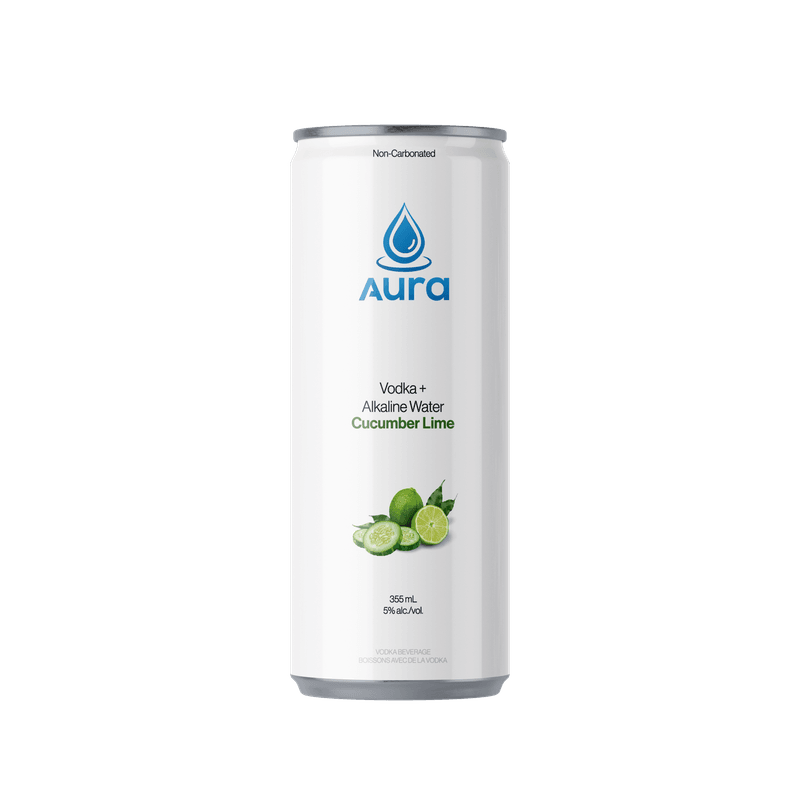
Aura is a still canned vodka water made with premium vodka, alkaline water (pH 8.5+) and natural flavour. It has no carbonation, no added sugar and no artificial sweeteners. It comes in 355 mL aluminium cans in three flavours: Cucumber Lime, Coconut Pineapple and Mango Peach. Once the can is empty, it goes back through the same system as any other. You can learn more about why Aura or browse our vodka water cocktails. Aura is available in British Columbia, Alberta and Ontario. Our own direct and wholesale ordering delivers to Ontario addresses only. In BC and Alberta, find us through where to buy, at BC Liquor Stores and licensed private retailers in BC or at AGLC-licensed private retailers in Alberta.
Enjoy responsibly, and only if you're of legal drinking age in your province.
This article summarises published data for general interest and is not medical advice.
Sources
- The Aluminum Association and Can Manufacturers Institute. The Aluminum Can Advantage: Sustainability Key Performance Indicators. December 2024. aluminum.org
- Encorp Pacific (Canada). 2025 Annual Report, Section 1: Executive Summary. Return-It. Accessed October 2026. ar.return-it.ca
- Brewers Recycled Container Collection Council (BRCCC). 2024 Annual Report and Assurance Reports. Published by the Government of British Columbia, 2025. gov.bc.ca
- CM Consulting (C. Morawski, principal). Who Pays What? An Analysis of Beverage Container Collection and Costs in Canada 2018. October 2018 (2016 data). cmconsultinginc.com
- Alberta Beverage Container Recycling Corporation. Recycling FAQs. Accessed October 2026. abcrc.com