You have a flavour idea, a brand name, and maybe a venue that would stock it tomorrow. What you probably don't have is a clear picture of how a liquid in your head becomes 24 sealed cans in a case. That gap is where most Canadian drinks launches stall — not on branding, but on production. Here is a practical walkthrough of what beverage formulation services Canada providers actually cover, the order the work happens in, and the questions that separate a clean first run from an expensive one.
What beverage formulation services Canada providers actually cover
"Formulation" is broader than recipe development. A full-service partner is usually doing four distinct jobs, and you should confirm which ones are in scope before you compare quotes:
- Bench formulation — turning a flavour brief into a repeatable recipe with target ABV, pH, sweetness, mouthfeel and colour written down as specifications, not adjectives.
- Ingredient sourcing and validation — securing natural flavours, water treatment, and any functional inputs, with documentation for each.
- Scale-up trials — proving the bench recipe survives a production tank, because a beaker and a full batch do not behave the same way.
- Stability and shelf-life testing — confirming flavour, colour and clarity hold over time in the exact can and liner you intend to use.
Everything past that — filling, seaming, labelling, packing, palletising — is private label beverage manufacturing, and it is frequently a separate line item or even a separate company. Ask which hat your partner is wearing before you assume the whole job is covered.
From flavour brief to finished can
1. Write a brief a stranger could execute
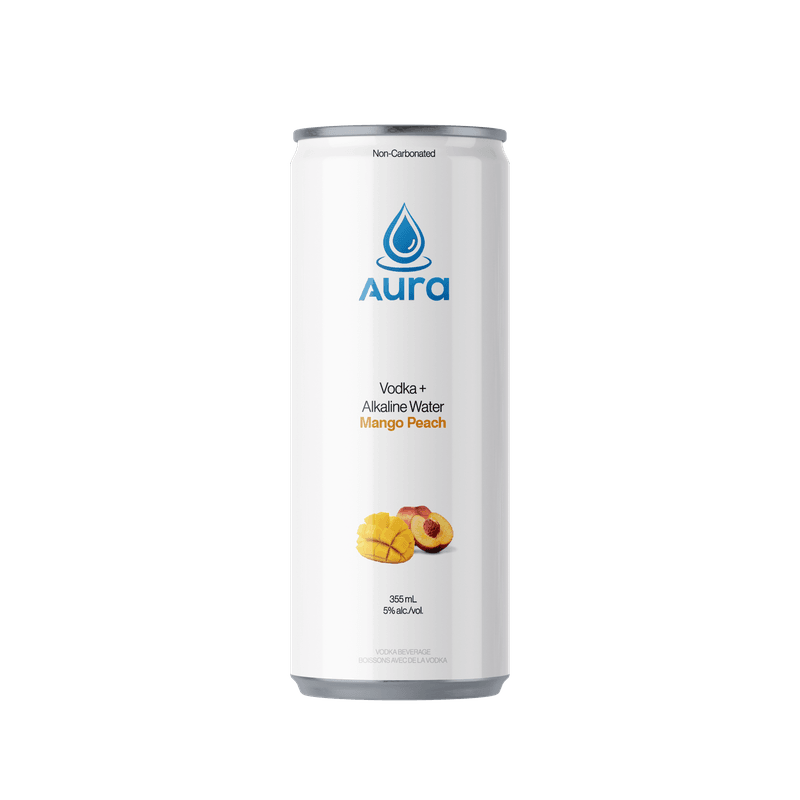
Name the format (355mL slim can), the target ABV, the sweetness level, the ingredient red lines, and — critically — whether the product is carbonated or still. Aura is a still vodka water with zero carbonation, and that one decision shaped our entire spec sheet: still products change filling equipment, dissolved-oxygen control and shelf-life testing. Say it on day one, not at pilot.
2. Bench samples and iteration
Expect several rounds. Give structured feedback ("too sweet on the finish, cucumber reads green rather than fresh") instead of scores out of ten. Taste at serving temperature, from a can if possible, never from a warm cup.
3. Pilot run and specification lock
A pilot proves the recipe at equipment scale and produces the retention samples your stability testing runs on. When it passes, lock the spec in writing — ingredient grades, suppliers, tolerances — so batch three tastes like batch one.
4. Label, compliance and first commercial run
Labels for alcoholic beverages carry mandatory elements and require review before printing. Print costs are real money, so do compliance review before you commit to a plate. Only then does your contract beverage manufacturer schedule the commercial run.
Minimum order quantities and timelines: ask, don't assume
MOQs and lead times vary enormously by facility, format, flavour count and season, and anyone quoting you a universal number online is guessing. What you can do today is ask precise questions: Is the MOQ per SKU or per production run? What is the change-over cost for a second or third flavour? What is the current lead time from approved formula to palletised product, and what drives the variance? For real figures on custom drinks manufacturing, contact our team with your format and volume and get numbers in writing.
Checklist: what to ask before signing
- Who owns the formula and the trial data if we part ways?
- Is the MOQ per SKU or per run, and what changes it?
- What certifications do you hold — CFIA registration, HACCP/GFSI, and an excise licence for alcohol production?
- Can you fill a still, non-carbonated product, and what is your dissolved-oxygen control?
- Who absorbs the cost of a batch that fails specification?
- Do you provide a certificate of analysis and retained samples per batch?
- What are your allergen and gluten controls, and can you support a gluten-free claim?
- Who handles warehousing, and where does title transfer?
The Canadian regulatory layer
Alcohol distribution in Canada is provincially regulated, and a valid liquor licence is required for licensee purchasing. Production also involves federal excise licensing. Rules and listing processes change, so confirm current requirements directly with your provincial liquor authority — AGLC in Alberta, the BC Liquor Distribution Branch in British Columbia, and AGCO/LCBO in Ontario. Build that timeline into your launch plan; it often runs longer than production.
If you would rather stock a finished brand than build one, see our vodka water cocktails, read why Aura, or check where to buy across BC, Alberta and Ontario. Licensees can start a case order through wholesale ordering. Please enjoy responsibly — for those of legal drinking age.