If you have been trying to figure out what Canadians actually drink now — and what to do about your own habit — you are probably stuck between two loud, unhelpful messages: "nobody drinks anymore" and "two drinks a week or you are gambling with your health." Neither is a plan. The Canadian alcohol consumption statistics published by Statistics Canada, together with the guidance led by the Canadian Centre on Substance Use and Addiction (CCSA), point to something more usable: total volume is falling fast, the sales-derived average is now about eight standard drinks a week, most adults report drinking nothing in a given seven days, and one category is still growing. Below are the figures, the arithmetic, and what the evidence does not support.
The Canadian alcohol consumption statistics, in plain numbers
Statistics Canada tracks every litre sold through provincial liquor authorities. In its release of 5 March 2026, covering the year ended 31 March 2025, sales volume fell 3.0% to 2,898 million litres and sales value fell 1.6% to $25.8 billion. Per legal-age person, that works out to 8.0 standard drinks a week, down from 8.7 the year before.
The prior year was the sharper break. In the 7 March 2025 release covering 2023/2024, volume dropped 3.8% to 2,988 million litres — which Statistics Canada described as the largest volume decline recorded since it began tracking alcohol sales in 1949. Beer fell 4.5% by volume, wine 4.8% (a third consecutive annual decline), spirits 3.9%.
What people say they drink
Sales data and survey data tell different stories, and you need both. The 2023 Canadian Community Health Survey, collected 3 January to 31 December 2023 and reported by Statistics Canada on 2 October 2024, found 77% of adults in the provinces drank at least once in the previous 12 months. But in the seven days before the survey: 54% reported no alcohol at all, 15% reported one to two standard drinks, 15% reported three to six, and 15% reported seven or more. Among 18-to-22-year-olds, 67% reported no alcohol in the past week, versus 51–57% in older groups.
Provincially, the accompanying data table put the share reporting no drinks in the past week at 57.6% in Ontario, 56.5% in Alberta and 53.3% in British Columbia. So the honest summary of drinking trends in Canada is not that everyone quit — it is that the middle emptied out while a stable minority still drinks most of the volume.
What Canada alcohol guidance 2023 actually changed
On 17 January 2023, CCSA released Canada's Guidance on Alcohol and Health, built over two years from roughly 6,000 peer-reviewed studies with an expert panel of 23 scientists from 16 organizations. It replaced the 2011 low-risk guidelines' weekly caps with a continuum of risk:
- 0 drinks per week — no alcohol-related risk.
- 2 standard drinks or fewer per week — "likely to avoid alcohol-related consequences for yourself or others at this level."
- 3–6 per week — increased risk of several cancers, including breast and colon.
- 7 or more per week — risk of heart disease or stroke increases significantly.
It also kept an occasion limit: no more than 2 drinks on any single day. Crucially, this is guidance for self-placement, not a legal limit or a prohibition — the document's own framing is that you decide where on the continuum you are comfortable.
The practical effect was enormous on paper. In a study of 1,502 Ontario community adults tracked across 11 waves from 2018 to 2022, Belisario, Doggett and MacKillop (2025) found 52% exceeded the new 2-drink weekly threshold versus just 11% under the 2011 guidelines — a 4.6-fold jump in who counts as above the line (57% of males, 49% of females). In an April 2023 subsample of 1,278, only 51% were aware of the new guidance, and 77% rated exceeding two drinks a week as little or no risk.
The ready to drink market Canada keeps growing
Against every declining category, one line went up. In 2023/2024, ciders and coolers — the bucket Statistics Canada uses for ready-to-drink beverages — were the only alcoholic category with increased sales: $2.3 billion, up 6.9% in value on 377 million litres. In 2024/2025 they grew again, to $2.4 billion (+4.8%) on 385 million litres (+2.2%), lifting their share of the value of alcohol sold from 8.7% to 9.3%.
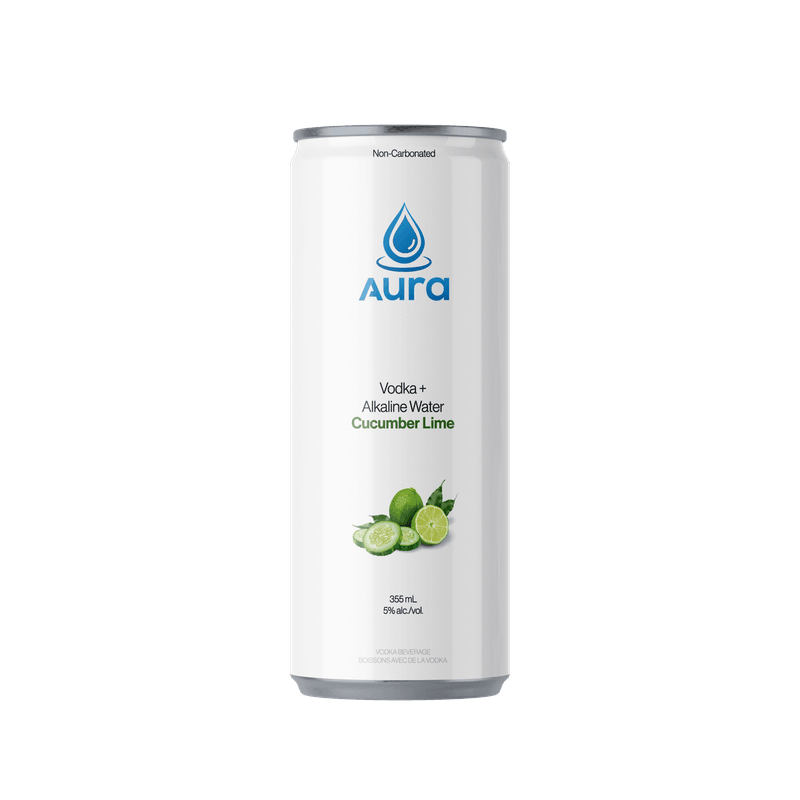
That is the shape of the ready to drink market Canada is building: fewer total litres, more of them in a sealed, single-serve can with a number printed on the side. Portion legibility is the reason. A free-poured highball is a guess; a 355mL can is not. Our vodka water cocktails sit in that category as the still option — premium vodka and alkaline water, no carbonation, no added sugar, no artificial sweeteners.
What to do with this tonight
- Count standard drinks, not containers. A Canadian standard drink is 17.05 mL (13.45 g) of pure alcohol — equivalent to 341 mL of 5% beer, 142 mL of 12% wine, or 43 mL of 40% spirits. The formula is mL × ABV% ÷ 17.05. A 355mL can at 5% ABV is 17.75 mL of pure alcohol, or about 1.04 standard drinks. Read the ABV printed on whatever you are holding and do that division once — you will never guess again.
- Pick your weekly number before the week starts, then place it on the CCSA continuum. Deciding in advance beats deciding at 9pm.
- Cap the occasion at two, per the 2023 guidance, regardless of your weekly total.
- Buy the format that makes the count automatic. Fixed-size cans do the arithmetic for you; a bottle and a free pour do not.
- Alternate with water and never drive after drinking. All of this assumes you are of legal drinking age in your province.
What the research does not show
Be skeptical in both directions. Several real limits apply:
- Self-reports are low. Statistics Canada notes its survey estimates came to roughly one-third of the alcohol accounted for in published sales data. Clay and colleagues (2025) put self-reported intake at about 38% of sales and applied a uniform correction that may not fit every group.
- Sales per capita is not personal consumption. It divides all litres sold across every legal-age resident — including the 54% who reported drinking nothing in a given week — and includes purchases by visitors.
- The mortality evidence is observational. Clay et al. linked 145,760 Canadian drinkers aged 15+ to death records from 2000 to 2017 (18,160 all-cause deaths, 7,210 alcohol-related) and found a dose-response gradient consistent with the 2023 bands — all-cause hazard ratios of 1.013 at 1–2 drinks weekly, 1.040 at 3–6, 1.093 at 7–15 and 1.270 above 15. The authors are explicit that no causal inference is possible and residual confounding remains.
- The Ontario reclassification study was not nationally representative, and its authors flag that their questionnaire misses intermittent drinkers.
- Nothing here makes any drink healthier. Format changes nothing about the alcohol. A can of Aura contains alcohol exactly like any other drink of the same strength; still versus sparkling is a comfort and taste preference, not a health, safety or intoxication claim. See why Aura for what the product is and is not.
This article summarises published research for general interest and is not medical advice.
If the count is what you are trying to fix, start with a format that counts itself. Aura is a still vodka water — no bubbles, no bloating, no added sugar — in Cucumber Lime, Coconut Pineapple and Mango Peach, 355mL cans by the case of 24. Direct and wholesale orders deliver to Ontario addresses only; if you are in British Columbia or Alberta, check where to buy — Aura is carried by BC Liquor Stores and licensed private retailers in BC, and by AGLC-licensed private retailers in Alberta. Please enjoy responsibly, and only if you are of legal drinking age.
Sources
- Statistics Canada. "Control and sale of alcoholic beverages and cannabis, April 1, 2024 to March 31, 2025." The Daily, 5 March 2026. Link
- Statistics Canada. "Control and sale of alcoholic beverages and cannabis, April 1, 2023 to March 31, 2024." The Daily, 7 March 2025. Link
- Statistics Canada. "A snapshot of alcohol consumption levels in Canada," Canadian Community Health Survey 2023. The Daily, 2 October 2024. Link (provincial table: Table 3)
- Canadian Centre on Substance Use and Addiction. Canada's Guidance on Alcohol and Health, released 17 January 2023. Link
- Belisario KL, Doggett A, MacKillop J. "The increase in risk classification using Canada's Guidance on Alcohol and Health: an empirical examination in a sample of community adults in Ontario." Health Promotion and Chronic Disease Prevention in Canada, 2025;45(2). DOI 10.24095/hpcdp.45.2.03; PMID 39937698. Link
- Clay JM, Callaghan RC, Sherk A, Naimi TS, Stockwell T, Asbridge M. "Alcohol consumption and mortality among Canadian drinkers: A national population-based survival analysis (2000–2017)." Drug and Alcohol Review, 2025;44(2):434–447. DOI 10.1111/dar.13993; PMID 39667732. Link
- Canadian Institute for Substance Use Research. "A Standard Drink," HereToHelp, 2025. Link