You're on a heated patio in January, a drink in hand, and your cheeks and fingers start to glow. So does alcohol warm you up? Short answer: it makes you feel warmer, but it doesn't add heat to your body, and in real cold it can make it easier to lose heat. The warm glow is blood moving toward your skin, and your skin is exactly where your body sheds heat. If you're out in a Canadian winter, the useful takeaway is simple: trust your clothes, your shelter and a thermometer over the feeling in your cheeks.
Does alcohol warm you up? What's actually happening in your body
When it's cold, your body protects its core (brain, heart, organs) in two main ways. It narrows the blood vessels near the skin (vasoconstriction), which keeps warm blood deeper inside. And when that isn't enough, it shivers, using muscle activity to make heat.
Alcohol pushes against both of these. A major review of the research by Harold Kalant and A.D. Lê, published in Pharmacology & Therapeutics in 1983, concluded that at low temperatures the most common effect of ethanol is to inhibit shivering, which reduces heat production. Ethanol also tends to increase heat loss through cutaneous vasodilation, meaning wider blood vessels in the skin. In the authors' words, this "makes for a greater feeling of comfort in the cold exposed subjects but increases the rate of fall of core temperature."
That one sentence explains the winter patio. Warm blood floods your skin, your skin's temperature sensors report "warm," and you feel cozy. Meanwhile, that blood is giving off heat to the cold air around you.
Why the warm feeling misleads you
Your sense of temperature mostly comes from the skin, not your core. When alcohol widens the vessels in your skin, the signal you get is pleasant warmth. Kalant and Lê noted that people keep losing more heat and making less of it even as body temperature falls, which they described as consistent with alcohol lowering the "set-point" of the body's thermostat. In practice, your body stops defending its core temperature as hard, and you stop noticing that it should.
Alcohol and cold weather: what the lab studies found
Some of the clearest experiments on this question come from Canadian labs, and they are more nuanced than the popular myth.
- Cold water, moderate dose (Victoria, BC). Fox, Hayward and Hobson put 10 volunteers in 10°C water for 45 minutes, with and without alcohol, and published the results in the Canadian Journal of Physiology and Pharmacology (1979). With blood alcohol averaging 82 mg per 100 mL (about 0.08%), alcohol reduced shivering heat production by an average of 13%. However, core cooling rates were not significantly different from the sober trials. The authors concluded that moderate alcohol did not speed the slide into hypothermia, and that alcohol's role in cold-water deaths comes mainly from causing accidents. They added that very high doses leading to unconsciousness would speed cooling.
- Mild cold, blood vessel response (Winnipeg, MB). Johnston, Bristow, Elias and Giesbrecht at the University of Manitoba tested seven people in 28°C water, reported in the European Journal of Applied Physiology (1996). At a breath alcohol level of about 0.097% at the start of cooling, alcohol lowered the core-temperature threshold at which blood vessels clamp down by 0.32°C and increased fingertip blood flow. It did not change the shivering threshold or the core cooling rate. They concluded that moderate drinking is unlikely to cause hypothermia through impaired thermoregulation alone, and is more likely to do it through behaviour.
So the lab evidence confirms the mechanism (more blood to the skin, somewhat less shivering) but does not show that a couple of drinks will, by themselves, make a healthy adult's core temperature crash. That honesty matters, and it points to where the real danger lies.
Alcohol hypothermia: what the death data shows
Outside the lab, the picture is grim. Researchers from the Public Health Agency of Canada and the BC Centre for Disease Control reviewed every BC death record from 1998 to 2012 that listed hypothermia or exposure to natural cold as an underlying or contributing cause, published in CMAJ Open (2015). They found 384 deaths. Alcohol was the most common additional cause of death, listed in 40.1% of them, followed by other psychoactive substances at 22.7%. Nearly half of the deaths (45.9%) happened in December, January and February, and older adults and people in low-income or sparsely populated areas had the highest rates.
A systematic review and meta-analysis by Alpert and colleagues, published in the American Journal of Preventive Medicine (2022), pooled 60 studies and additional state data from the U.S., Canada and Mexico. It estimated that 29% of hypothermia deaths are attributable to alcohol, based on decedents with a blood alcohol concentration of 0.10 g/dL or higher.
Put those findings next to the lab work and the pattern is clear. The danger isn't usually one warm drink on a heated patio. It's heavy drinking combined with exposure: impaired judgment, leaving your coat behind, deciding to walk home, sitting down outside, falling asleep, or passing out somewhere cold. That fits the Fox and Johnston conclusions about behaviour and loss of consciousness.
Winter drinking safety: what to do tonight
If you're heading out to a patio, a ski chalet, a rink-side party or a cottage this winter, here's practical guidance:
- Dress for the temperature, not for how you feel. Wear the layers, hat and gloves you'd wear sober. That warm glow is a signal from your skin, not your core.
- Count your drinks. Canada's Guidance on Alcohol and Health (CCSA, 2023) puts 1 to 2 standard drinks a week at low risk, and notes that more than 2 drinks on any one occasion raises the risk of injury.
- Plan the trip home before the first drink. Book a ride, set a meeting point and never plan to walk a long distance home in the cold after drinking.
- Don't drink before outdoor activities. Skip alcohol before snowshoeing, skating on a lake, snowmobiling, ice fishing or a winter hike. Cold-water and outdoor accidents are where alcohol does the most damage.
- Eat and alternate. Have food, and drink water or a warm non-alcoholic drink between alcoholic ones.
- Watch your friends. Shivering that stops, confusion, slurred speech and drowsiness can look like intoxication but may be hypothermia. Get the person indoors and call 911 if you're in doubt. Never let someone who has been drinking "sleep it off" outside or in a cold car.
- Take extra care with older guests. The BC data showed hypothermia death rates rise with age.
Caveats: what the research does and doesn't show
- The lab studies are small (7 and 10 participants), mostly young healthy volunteers, and used cold water rather than winter air. Their results may not apply to older adults, people with medical conditions or long exposures.
- The findings partly conflict. The Kalant and Lê review describes faster core cooling, while the two Canadian immersion studies found no measurable change in cooling rate at moderate doses. Differences in dose, temperature and exercise likely explain some of the gap.
- The death data shows association, not cause. Alcohol on a death record overlaps with homelessness, mental illness, other substances and exposure, and one drink can't be separated from those factors.
- None of this shows that any type of drink, including ours, is safer in the cold. The alcohol is the same whatever it's mixed with.
Where Aura fits
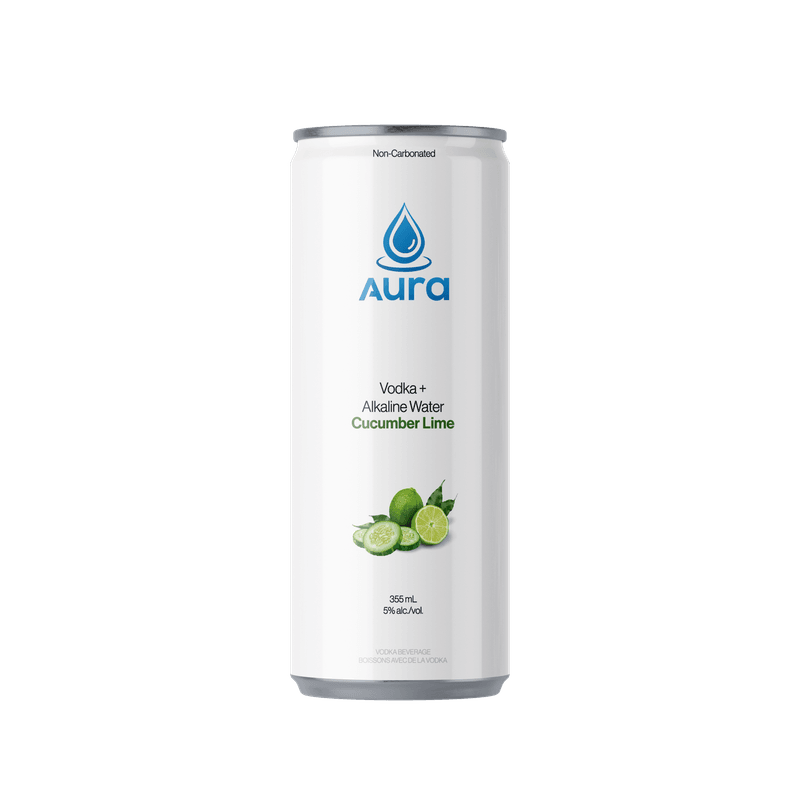
Aura is a still vodka water: premium vodka, alkaline water and natural flavour, with no carbonation, no added sugar and no artificial sweeteners. We make it because we think a clean, bubble-free drink is nicer to sip, but it doesn't warm you up and it isn't a health product. On a cold night, treat a can of Aura like any other drink. Count it, pair it with food and water, and dress for the weather. You can read more about why Aura is made the way it is.
Whether you're planning a heated-patio night or a cozy evening indoors, explore our vodka water cocktails in Cucumber Lime, Coconut Pineapple and Mango Peach, then find a retailer near you on our where to buy page. Please enjoy responsibly, only if you are of legal drinking age in your province, and never drink and drive.
This article summarises published research for general interest and is not medical advice.
Sources
- Kalant H, Lê AD. Effects of ethanol on thermoregulation. Pharmacology & Therapeutics. 1983;23(3):313-364. doi:10.1016/0163-7258(83)90018-9. PMID: 6144116. https://pubmed.ncbi.nlm.nih.gov/6144116/
- Fox GR, Hayward JS, Hobson GN. Effect of alcohol on thermal balance of man in cold water. Canadian Journal of Physiology and Pharmacology. 1979;57(8):860-865. doi:10.1139/y79-131. PMID: 497899. https://pubmed.ncbi.nlm.nih.gov/497899/
- Johnston CE, Bristow GK, Elias DA, Giesbrecht GG. Alcohol lowers the vasoconstriction threshold in humans without affecting core cooling rate during mild cold exposure. European Journal of Applied Physiology and Occupational Physiology. 1996;74(3):293-295. doi:10.1007/BF00377453. PMID: 8897037. https://pubmed.ncbi.nlm.nih.gov/8897037/
- Stares J, Kosatsky T. Hypothermia as a cause of death in British Columbia, 1998-2012: a descriptive assessment. CMAJ Open. 2015;3(4):E352-E358. doi:10.9778/cmajo.20150013. PMID: 26770959. https://pubmed.ncbi.nlm.nih.gov/26770959/
- Alpert HR, Slater ME, Yoon YH, Chen CM, Winstanley N, Esser MB. Alcohol consumption and 15 causes of fatal injuries: a systematic review and meta-analysis. American Journal of Preventive Medicine. 2022;63(2):286-300. doi:10.1016/j.amepre.2022.03.025. PMID: 35581102. https://pubmed.ncbi.nlm.nih.gov/35581102/
- Canadian Centre on Substance Use and Addiction. Canada's Guidance on Alcohol and Health: Final Report. 2023. https://www.ccsa.ca/canadas-guidance-alcohol-and-health