You had a big night out, and now you feel run down and you're wondering if you're about to get sick. Or maybe you've just noticed that colds seem to land more often during heavy-drinking stretches. So, does alcohol weaken immune system defences? The short answer from the research: yes, heavy drinking measurably changes how your immune system behaves. A single binge shifts immune markers within hours, and years of heavy drinking do something different and more lasting. Below is what the studies actually measured, what they didn't, and what you can reasonably do about it today.
Does alcohol weaken immune system function after just one night?
Two small but carefully run studies gave healthy adults a binge-level dose of alcohol in a clinic and drew blood repeatedly over the following hours. Both found changes that were fast and measurable.
The first 20 minutes: a brief inflammatory spike
In a 2015 study in the journal Alcohol, Afshar and colleagues gave 15 healthy volunteers (median age 27, 53% female) 0.89 g of alcohol per kg of body weight for men and 0.81 g/kg for women, drunk over 20 minutes. That averaged about 62 grams of alcohol, roughly four to five Canadian standard drinks. Median peak blood alcohol was about 129 mg/dL. Twenty minutes after drinking, the researchers saw what they called an early pro-inflammatory state: more circulating white blood cells, monocytes and natural killer cells, plus a bigger tumour necrosis factor (TNF-α) response when blood samples were challenged with a bacterial component in the lab.
Two to five hours later: the immune system dials down
The same study found the picture flipped at 2 and 5 hours. Circulating monocytes and natural killer cells dropped, the inflammatory signal IL-1β was blunted, and there was a trend toward more of the anti-inflammatory signal IL-10. The authors concluded that a single binge produced "an early and transient pro-inflammatory state followed by an anti-inflammatory state." In plain terms, the cells that act as your first line of defence were, for a few hours, less ready to respond.
Gut bacteria leaking into the bloodstream
A 2014 PLOS ONE study by Bala and colleagues enrolled 25 healthy people (11 men, 14 women, aged 21 to 56) with no history of alcohol use disorder. Each drank 2 mL of 40% vodka per kg of body weight, mixed into juice. For a 70 kg adult that works out to about 140 mL of vodka, a bit over three Canadian standard drinks. Blood levels of endotoxin, a component of gut bacteria, rose within 30 minutes and stayed elevated for 3 hours. Bacterial DNA in the blood was still raised at 24 hours, and acute-phase proteins (general markers of inflammation) stayed up longer too. Women reached higher blood alcohol and endotoxin levels than men. People in the comparison group, who drank no alcohol, showed no such change.
That's the core of the binge drinking immunity story. One heavy session doesn't just make you tired. For a period afterwards it changes which immune cells are circulating and how they react.
How heavy long-term drinking is different
The alcohol immune research is fairly consistent that the pattern of drinking matters. A 2015 review in Alcohol Research: Current Reviews by Szabo and Saha sums it up: acute alcohol tends to inhibit inflammatory responses, while chronic alcohol tends to accelerate them. Long-term heavy drinking also interferes with the adaptive immune system, meaning the T cells and antibody responses that remember and target specific germs. The reviewers note that this raises the risk of both viral and bacterial infections. They also point out that the effect is often a "subclinical immunosuppression." You may not notice anything until you meet a second hit, such as an infection or an injury.
An editorial introducing the same journal issue, by Sarkar, Jung and Wang, lists the conditions clinicians have long linked to heavy drinking: pneumonia, acute respiratory distress syndrome (ARDS), sepsis and tuberculosis. It also notes that alcohol damages the gut barrier and impairs immune cells in the lungs.
What the population data shows about alcohol and getting sick
- Pneumonia: A 2018 meta-analysis in BMJ Open (Simou, Britton and Leonardi-Bee) pooled 14 studies. It found an 83% higher risk of community-acquired pneumonia among people who drank, or drank more, compared with those who drank none or less (relative risk 1.83, 95% CI 1.30 to 2.57). Each additional 10 to 20 g of alcohol per day was linked to an 8% increase in risk.
- ARDS: A companion 2018 meta-analysis in Chest (Simou, Leonardi-Bee and Britton) covered 17 observational studies and 177,674 people. High versus low alcohol consumption was linked to higher odds of ARDS (odds ratio 1.89). That association came mainly from people with a history of alcohol abuse.
- Canada's guidance: Canada's Guidance on Alcohol and Health (CCSA, 2023) states that alcohol has been found to causally increase the risk of lower respiratory infections. It adds that because infection risk is affected by alcohol's acute effects, cutting back "will immediately decrease the risk."
The caveats: what the research does not show
- Small samples. The binge studies had 15 and 25 participants. They are useful for showing that changes happen, but too small to say how big the effect is for any one person.
- Markers aren't illness. Neither binge study tracked whether participants actually caught anything. Much of the cell reactivity was measured by stimulating blood samples in a lab. Even the Afshar team wrote that the overall effect on inflammation inside the body "cannot be definitively determined from these data."
- Observational data has limits. The pneumonia meta-analysis reported substantial differences between the studies it pooled, partly due to how studies adjusted for other factors. Heavy drinking often travels with smoking, poor sleep and poor nutrition, all of which affect immunity.
- Heavy drinking drives most of the evidence. The strongest infection links, such as ARDS, come mostly from people with a history of alcohol abuse. The research doesn't give a precise threshold where risk starts for a moderate drinker. The Szabo and Saha review does note that even moderate amounts can influence immune responses.
- No drink format changes this. Nothing here suggests any type of alcoholic drink is easier on the immune system than another. Alcohol is alcohol.
What you can do today
- Count standard drinks, not glasses. In Canada a standard drink is 13.45 g of pure alcohol: a 341 mL bottle of 5% beer, a 142 mL glass of 12% wine or a 43 mL shot of 40% spirits. Check the alcohol content on any can or bottle and do the maths.
- Stay at two or fewer per occasion. Canada's guidance says more than 2 standard drinks per occasion raises the risk of harm, and that 2 or fewer per week keeps overall risk low. The binge doses in the studies above were well past that.
- Skip the heavy session when you're already fighting something. The binge studies show a window of hours where some immune responses were dampened. That's a poor time to add another load.
- Protect your sleep. A 2015 review by Thakkar, Sharma and Sahota notes that alcohol disrupts sleep in the second half of the night. Stopping earlier in the evening gives your body more clean recovery time.
- Space your drinks and eat. Slower drinking means a lower peak blood alcohol, and the binge effects above were measured at high peaks.
- If heavy drinking is a pattern, cut back. The CCSA report says every standard drink counts and any reduction is beneficial. Talk to your doctor if you're struggling to reduce.
Where Aura fits
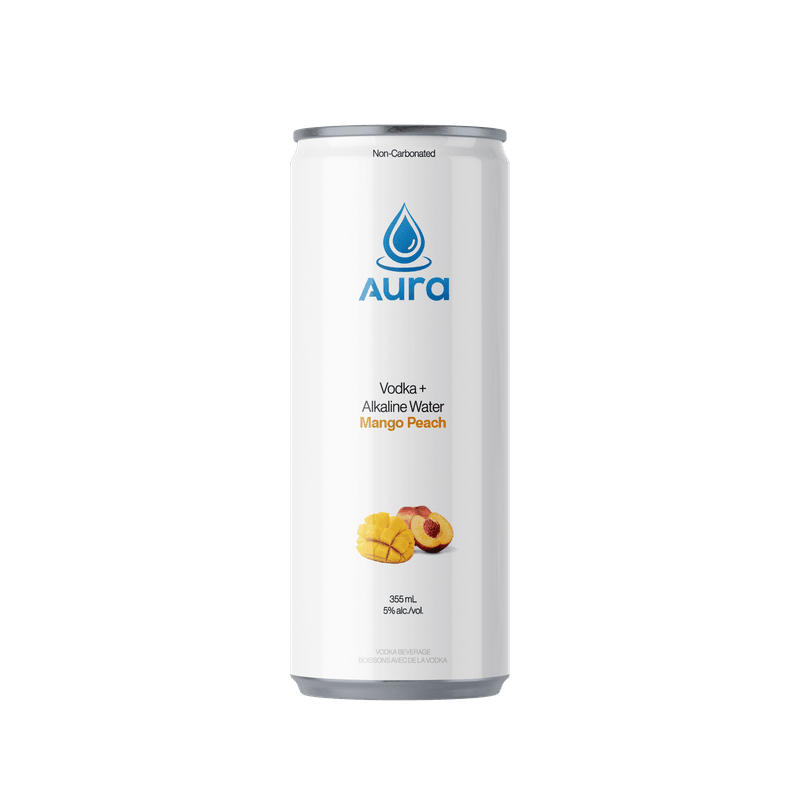
We make Aura, a still canned vodka water: premium vodka, alkaline water (pH 8.5+) and natural flavour, with zero carbonation, no added sugar, no artificial sweeteners and no preservatives. No bubbles means no bloating, and that's a comfort choice, not a health claim. The alcohol in a can of Aura affects your body exactly the way the same amount of alcohol from any other drink does. Nothing in it protects your immune system. What a clearly labelled 355 mL can does give you is an easy way to count your drinks and pace yourself. You can read more about why Aura is made the way it is.
Enjoy Aura responsibly, and only if you are of legal drinking age in your province. Ready to try Cucumber Lime, Coconut Pineapple or Mango Peach? Browse our vodka water cocktails. We deliver direct to Ontario addresses only. In British Columbia and Alberta, check where to buy at BC Liquor Stores, licensed private retailers in BC, or AGLC-licensed private retailers in Alberta.
This article summarises published research for general interest and is not medical advice.
Sources
- Afshar M, Richards S, Mann D, Cross A, Smith GB, Netzer G, Kovacs E, Hasday J. Acute immunomodulatory effects of binge alcohol ingestion. Alcohol. 2015;49(1):57-64. doi:10.1016/j.alcohol.2014.10.002. PMID: 25572859. https://pubmed.ncbi.nlm.nih.gov/25572859/
- Bala S, Marcos M, Gattu A, Catalano D, Szabo G. Acute binge drinking increases serum endotoxin and bacterial DNA levels in healthy individuals. PLOS ONE. 2014;9(5):e96864. doi:10.1371/journal.pone.0096864. PMID: 24828436. https://pubmed.ncbi.nlm.nih.gov/24828436/
- Szabo G, Saha B. Alcohol's effect on host defense. Alcohol Research: Current Reviews. 2015;37(2):159-170. doi:10.35946/arcr.v37.2.01. PMID: 26695755. https://pubmed.ncbi.nlm.nih.gov/26695755/
- Sarkar D, Jung MK, Wang HJ. Alcohol and the immune system. Alcohol Research: Current Reviews. 2015;37(2):153-155. PMCID: PMC4590612. https://pmc.ncbi.nlm.nih.gov/articles/PMC4590612/
- Simou E, Britton J, Leonardi-Bee J. Alcohol and the risk of pneumonia: a systematic review and meta-analysis. BMJ Open. 2018;8(8):e022344. doi:10.1136/bmjopen-2018-022344. PMID: 30135186. https://pubmed.ncbi.nlm.nih.gov/30135186/
- Simou E, Leonardi-Bee J, Britton J. The effect of alcohol consumption on the risk of ARDS: a systematic review and meta-analysis. Chest. 2018;154(1):58-68. doi:10.1016/j.chest.2017.11.041. PMID: 29288645. https://pubmed.ncbi.nlm.nih.gov/29288645/
- Thakkar MM, Sharma R, Sahota P. Alcohol disrupts sleep homeostasis. Alcohol. 2015;49(4):299-310. doi:10.1016/j.alcohol.2014.07.019. PMID: 25499829. https://pubmed.ncbi.nlm.nih.gov/25499829/
- Paradis C, Butt P, Shield K, Poole N, Wells S, Naimi T, Sherk A, and the Low-Risk Alcohol Drinking Guidelines Scientific Expert Panels. Canada's Guidance on Alcohol and Health: Final Report. Ottawa: Canadian Centre on Substance Use and Addiction; 2023. ISBN 978-1-77871-046-9. https://www.ccsa.ca/sites/default/files/2023-01/Canada%27s%20Guidance%20on%20Alcohol%20and%20Health%20Final%20Report.pdf