You have dinner at 7 and drinks at 9, and somewhere in your head is the advice everyone's parents gave: line your stomach first. The useful question is whether that does anything measurable, or whether it is folk wisdom that survived because it sounds sensible. The short answer from the eating before drinking research is that the effect is real, it has been measured in controlled labs since the 1990s, and it is larger than most people expect — while doing almost nothing for the one thing you probably care about most.
The practical version, before the evidence:
- Eat a real meal, not a handful of chips. In the trials, snacks barely moved the needle. Full meals did.
- Timing beats heroics. The best-documented effect comes from eating immediately before you start drinking.
- Carbohydrate-heavy meals have the most consistent evidence. A high-protein meal alone failed to lower blood alcohol in one of the larger studies.
- Food lowers your peak, not your total. Four drinks is still four drinks.
- Food does not reliably restore coordination or reaction time, so it is never a reason to drive.
What the eating before drinking research actually measured
The cleanest experiment is a crossover trial by A.W. Jones and K.A. Jönsson, published in the Journal of Forensic Sciences in 1994 (PMID 8064267). Ten healthy men drank the same ethanol dose (0.80 g per kg of body weight) twice: once after an overnight fast, once immediately after breakfast — orange juice, fruit yogurt, two cheese sandwiches, a boiled egg and coffee. Peak blood alcohol was 67 ± 9.5 mg/dL after the meal versus 104 ± 16.5 mg/dL fasting (P < 0.001), a drop of roughly a third. Total exposure over six hours fell from 398 ± 56 to 241 ± 34 mg/dL × h.
A breath-alcohol study by David Sadler and Joanna Fox in Science & Justice (2011) tested 8 men and 8 women fasting, after a snack of crisps, and after a light meal (PMID 21334574). Peak breath alcohol averaged 30.5 µg/100 mL fasting and 21.4 µg/100 mL after the meal. The alcohol available for absorption fell to about 66% in women and 71% in men after the meal — but stayed almost complete after the snack. The crisps did essentially nothing.
Gastric emptying alcohol studies: your stomach is the bottleneck
Alcohol is absorbed mainly in the small intestine, so how fast your stomach empties largely sets how fast alcohol reaches your blood. Food, especially calorie-dense food, slows that handover and spreads the same dose over more time. Because your liver clears alcohol at a roughly steady rate throughout, slower delivery means a lower crest.
The traffic runs both ways. Andreas Franke and colleagues, in Alcohol and Alcoholism (2005), used ultrasound in 16 healthy men and found alcohol itself delays the emptying of a solid meal (PMID 15699055): half-emptying time was 131.3 ± 7 minutes with water, rising to 158.8 ± 9.3 with 4% ethanol, 165.6 ± 6.2 with 10%, 163.1 ± 11 with beer and 186.3 ± 8.4 with red wine. Calorie load mattered most — high-calorie meals (740 kcal) roughly doubled emptying time versus low-calorie ones (270 kcal). That is the lever food is pulling.
Which foods have actually been tested
Fewer than you would hope. The work on food and alcohol absorption has tested broad macronutrient categories, not recipes:
- Carbohydrate: Frances Finnigan and colleagues (Appetite, 1998) gave 51 male volunteers either nothing, a high-carbohydrate meal (85% of energy) or a high-protein meal (94% of energy). The high-carbohydrate meal lowered blood alcohol at peak and at two hours (PMID 9920688).
- Protein: in that same study, the high-protein meal had no significant effect on blood alcohol at all.
- Mixed meals: the Jones breakfast and the Sadler light meal were ordinary mixed food, and both worked.
- Snacks: crisps alone did not meaningfully reduce peak.
So: a substantial mixed or carbohydrate-forward meal is well supported. Protein as a standalone strategy is not. And no study has tested a specific food paired with a specific drink.
What this research does not show
- Food does not reliably reduce impairment. Finnigan's team found that although alcohol impaired psychomotor performance, neither meal significantly reduced that impairment. Lower blood alcohol did not mean steadier hands.
- The samples are small, dated and mostly male. Ten men, fifty-one men, sixteen men, sixteen people split by sex — lab studies from 1994 to 2011 using fixed doses and overnight fasts, not a real Saturday night.
- Peak is not total. Food flattens the curve; the same alcohol still reaches your liver.
- Concentration findings genuinely conflict. Mack Mitchell's team (Alcoholism: Clinical and Experimental Research, 2014) gave 15 fasting men 0.5 g/kg and found peak blood alcohol highest with vodka and tonic at 20% v/v (77.4 ± 17.0 mg/dL) versus wine (61.7 ± 10.8) and beer (50.3 ± 9.8), p < 0.001 (PMID 24655007). But Roberts and Robinson (Journal of Forensic and Legal Medicine, 2007) found 20 of 21 subjects absorbed dilute vodka (18.75%) faster than neat vodka (37.5%), p < 0.001 (PMID 17720590). Different concentration ranges, opposite directions. Anyone claiming dilution has one simple effect is overreading the data.
Roberts and Robinson also compared vodka with still water against vodka with carbonated water, reporting faster absorption with the carbonated mixer in 14 of 21 subjects (p = 0.006). Seven subjects showed no change or a decrease, everyone was fasting, and the finding has not been widely replicated. To be clear: that is one small rate finding, not evidence that a still drink is safer, healthier or less intoxicating. The alcohol in the can is the same alcohol either way.
Vodka food pairing, and a plan for tonight
The evidence points somewhere unglamorous: put out real food before the first drink, not after the third. A grain salad, bread and cheese, skewers off the barbecue — something substantial, eaten in the half hour before you pour.
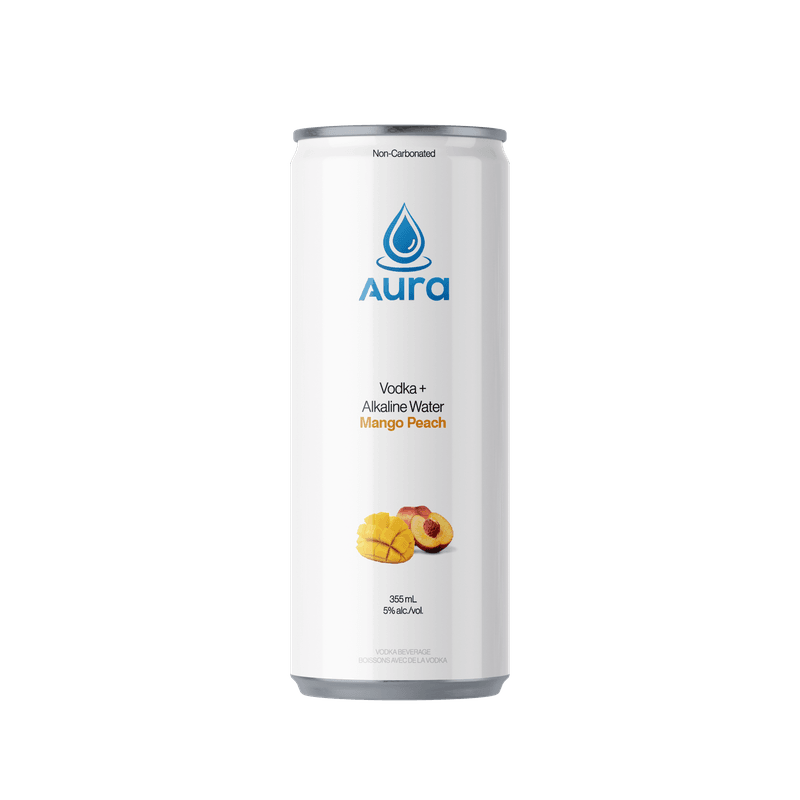
For vodka food pairing with our vodka water cocktails, the still format is the point. With no carbonation there is nothing scrubbing your palate between bites, so the flavours sit alongside food instead of cutting across it. Cucumber Lime suits grilled fish and herby grain salads. Coconut Pineapple holds up to jerk chicken, pork and satay. Mango Peach handles chili heat and sharp cheese. Each 355 mL can is a fixed, known pour, which makes counting easier than free-poured spirits — Canada's guidance defines a standard drink as 13.45 g of alcohol, so check the can and count honestly.
Canadian public-health advice is blunt on this point. The Canadian Centre on Substance Use and Addiction tells drinkers not to drink on an empty stomach, and to eat food so the alcohol absorbs slowly (Knowing Your Limits with Alcohol). Its 2023 guidance also notes that consuming more than 2 standard drinks per occasion is associated with an increased risk of harms to self and others.
Eat first, count your cans, drink still. Order a case of 24 direct from us for delivery to Ontario addresses, or read why Aura to see why we left the bubbles out in the first place. In British Columbia and Alberta, find us through where to buy — BC Liquor Stores and licensed private retailers in BC, AGLC-licensed private retailers in Alberta. Please enjoy responsibly, and only if you are of legal drinking age in your province.
This article summarises published research for general interest and is not medical advice.
Sources
- Jones AW, Jönsson KA. Food-induced lowering of blood-ethanol profiles and increased rate of elimination immediately after a meal. Journal of Forensic Sciences. 1994;39(4):1084–93. PMID 8064267. pubmed.ncbi.nlm.nih.gov/8064267
- Finnigan F, Hammersley R, Millar K. Effects of meal composition on blood alcohol level, psychomotor performance and subjective state after ingestion of alcohol. Appetite. 1998;31(3):361–75. doi:10.1006/appe.1998.0168. PMID 9920688. pubmed.ncbi.nlm.nih.gov/9920688
- Franke A, Nakchbandi IA, Schneider A, Harder H, Singer MV. The effect of ethanol and alcoholic beverages on gastric emptying of solid meals in humans. Alcohol and Alcoholism. 2005;40(3):187–93. doi:10.1093/alcalc/agh138. PMID 15699055. pubmed.ncbi.nlm.nih.gov/15699055
- Roberts C, Robinson SP. Alcohol concentration and carbonation of drinks: the effect on blood alcohol levels. Journal of Forensic and Legal Medicine. 2007;14(7):398–405. doi:10.1016/j.jflm.2006.12.010. PMID 17720590. pubmed.ncbi.nlm.nih.gov/17720590
- Sadler DW, Fox J. Intra-individual and inter-individual variation in breath alcohol pharmacokinetics: the effect of food on absorption. Science & Justice. 2011;51(1):3–9. doi:10.1016/j.scijus.2010.10.003. PMID 21334574. pubmed.ncbi.nlm.nih.gov/21334574
- Mitchell MC Jr, Teigen EL, Ramchandani VA. Absorption and peak blood alcohol concentration after drinking beer, wine, or spirits. Alcoholism: Clinical and Experimental Research. 2014;38(5):1200–4. doi:10.1111/acer.12355. PMID 24655007. pubmed.ncbi.nlm.nih.gov/24655007
- Canadian Centre on Substance Use and Addiction. Canada's Guidance on Alcohol and Health. CCSA, 2023. ccsa.ca
- Canadian Centre on Substance Use and Addiction. Knowing Your Limits with Alcohol: A Practical Guide to Assessing Your Drinking. CCSA, 2023. ccsa.ca (PDF)