
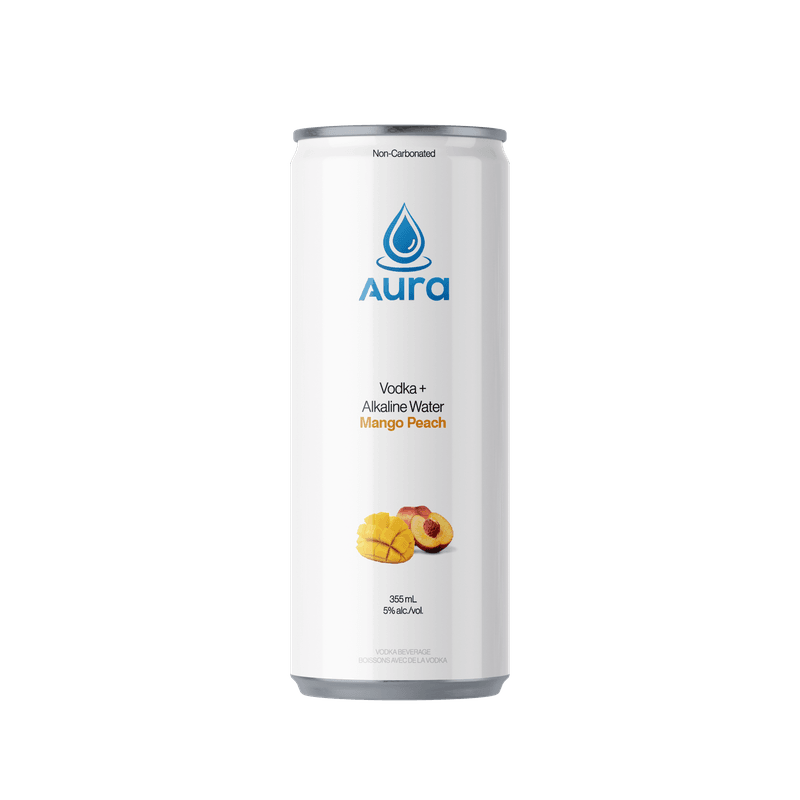
You look at the till total on a case of canned cocktails and wonder how a 355 mL can got priced like a pint at a bar. A shelf price is a stack of layers, and excise tax alcohol Canada rules are the smallest one. Here is that stack pulled apart, using published federal and provincial rates.
The headline figure first: at the rates the Canada Revenue Agency lists as effective April 1, 2026, a 355 mL ready-to-drink can at 7% ABV or under carries roughly 12.7 cents of federal excise duty — about $3.05 across a case of 24. If that sounds small next to what you paid, it is. That gap is the whole story.
How excise tax alcohol Canada rules treat spirits, beer and wine
Canada does not tax alcohol with one formula. Three systems run in parallel, each with a different measuring stick, and which one applies to a canned drink depends on what the alcohol was made from.
- Spirits above 7% ABV — taxed on pure alcohol: $14.117 per litre of absolute ethyl alcohol, per the CRA excise duty rates effective April 1, 2026.
- Spirits at 7% ABV or under — their own line: $0.358 per litre of product, not of alcohol. Strength stops mattering inside that band.
- Wine — per litre of product in three bands: $0.022 (≤1.2% ABV), $0.358 (1.2–7%) and $0.745 (above 7%).
- Beer — per hectolitre: $37.69 per hL above 2.5% ABV, with steeply reduced rates for Canadian brewers on their first 75,000 hL, starting at $1.8845 per hL.
Note what that means: a low-ABV spirits-based RTD and a low-ABV wine-based cooler pay the identical federal rate.
The per-can math
- 355 mL RTD at ≤7% ABV (spirits or wine base): 0.355 × $0.358 = 12.7¢
- 355 mL beer above 2.5% ABV, large brewer: 0.355 × $0.3769 = 13.4¢
- 355 mL beer from a small brewer's first 2,000 hL: 0.7¢
- That same 355 mL can at 5% ABV, taxed at the full spirits rate: 25.1¢
- 750 mL bottle of 40% ABV vodka: 0.30 L absolute alcohol × $14.117 = $4.24
So a canned cocktail under 7% ABV pays slightly less federal excise than an equivalent can of mainstream beer, and about half what it would without the low-ABV band. Small Canadian brewers are the real outlier — their first-tier rate is about one-nineteenth of the RTD rate. That, not the spirits rate, is the genuine asymmetry in RTD tax Canada debates.
The 2022 question: what actually changed, and what didn't
Plainly, because much writing on this gets it wrong: there was no 2022 federal measure creating a reduced excise rate for spirits-based RTDs in Canada. The low-ABV spirits line is item 2 of Schedule 4 to the Excise Act, 2001, and its amendment history reads 2002, 2006, 2017 — no 2022 entry. Its $0.295-per-litre starting figure was set by section 48 of the Budget Implementation Act, 2006, effective July 1, 2006. Everything since is indexation under subsection 123.1(2).
Two real things did happen in 2022, and both touched canned drinks:
- June 30, 2022 — the exemption for wine produced in Canada wholly from Canadian-grown agricultural product ended. CRA memorandum EDM4-1-1 (June 2025) confirms it "ended on June 30, 2022," leaving relief only for wine from honey or apples, personal production and small producers. Canadian wine-based coolers that had been duty-free began paying about 11.7 cents per 355 mL can at the then-current $0.330 rate.
- July 1, 2022 — excise duty on beer at 0.5% ABV or less was eliminated (CRA Excise and GST/HST News No. 111).
Net effect: 2022 narrowed the wine-versus-spirits gap by removing an exemption, not by cutting a rate.
So why are canned cocktails expensive? Follow the markup
Federal duty is not where your money goes. Provincial markup is. Ontario is the clearest case because the LCBO publishes its formula: from April 1, 2026, wholesale price = landed cost + mark-up + cost of service differential + deposit + HST — and landed cost includes federal excise and customs duties.
The LCBO's published mark-up schedule applies ad valorem rates by category and ABV tier. In the lowest tier (0.5–7.1% ABV): 35% for RTDs, 66% for wine, 75% for spirits, 20% for cider. Beer is marked up volumetrically instead — $1.18 per litre packaged for a manufacturer, $0.46 for a microbrewer.
Because federal duty sits inside landed cost, it gets marked up and then taxed again. In Ontario, 12.7 cents of excise becomes about 17.2 cents after a 35% RTD mark-up and about 19.4 cents once 13% HST lands on top — roughly $4.65 on a case of 24. Retailers then price above wholesale, so the real figure is higher. That compounding is the most under-discussed feature of alcohol pricing Canada.
Ontario's separate spirits basic tax (20% at 7.1% ABV or less from April 1, 2026) is narrower than people assume: the Ontario Ministry of Finance says it applies only at a distillery's own on-site store, not to LCBO, grocery or licensee purchases.
How much of the price is tax, really?
The best peer-reviewed Canadian estimate is Churchill, Stockwell and Sherk in Health Promotion and Chronic Disease Prevention in Canada (2021). Using product-level liquor store data from British Columbia and Ontario, they put total taxation at roughly 16–22% of a typical beer's price, under 20% for wine and for coolers and ciders, and 20–31% for spirits. A $43.01 spirits bottle carried about $8.92 in tax — 20.7%. Their key line: "ad valorem sales taxes account for the vast majority of the investigated taxation."
For scale, Statistics Canada reported on March 5, 2026 that ciders and coolers were the only growing category in 2024/2025: up 4.8% to $2.4 billion, or 9.3% of a $25.8 billion market that fell 1.6%.
Three things you can actually do today
- Compare price per litre, not per can. Below 7% ABV duty is fixed by volume, not strength, so format — not tax — drives most of the gap between a 355 mL can and a 473 mL one.
- Buy by the case. Excise and markup scale linearly with volume; handling and distribution do not, so case pricing is where the per-can figure moves most.
- Check the ABV tier. A product at 7.1% ABV sits in the LCBO's lowest mark-up tier; 7.2% moves it up. That one decimal takes the RTD mark-up from 35% to 50%.
Limits and caveats
Don't push this too far. The Churchill et al. figures rest on BC data from 2014 and 2016 and Ontario data from 2017 — they predate Ontario's current wholesale model, and the authors note that applying national results to one province requires adjusting for provincial measures. They also flag that Canadian research linking excise rates to consumption and harm is limited. The LCBO schedule is Ontario-only, and the per-can math assumes a domestic product with no cost of service differential — imports pay more.
And none of this says anything about health: a still canned cocktail and a carbonated one at the same ABV contain the same alcohol. Why Aura covers what makes our cans different — premium vodka, alkaline water, no carbonation, no added sugar — but "no bubbles" is a texture claim, not a health one.
Ready to do the math on your own case?
Now test the stack against a real product. Browse our vodka water cocktails in Cucumber Lime, Coconut Pineapple and Mango Peach — still, never carbonated, 355 mL cans by the case of 24. Our own direct and wholesale ordering delivers to Ontario addresses only; in Alberta or British Columbia, use where to buy to find us through AGLC-licensed private retailers, BC Liquor Stores and licensed private retailers.
Please enjoy responsibly, and only if you are of legal drinking age in your province. This article summarises published research and official rate schedules for general interest; it is not medical, legal or tax advice.
Sources
- Canada Revenue Agency. Excise duty rates. Government of Canada, rates effective April 1, 2026. canada.ca
- Government of Canada. Excise Act, 2001 (S.C. 2002, c. 22), Schedule 4. Justice Laws Website. laws-lois.justice.gc.ca
- Government of Canada. Budget Implementation Act, 2006 (S.C. 2006, c. 4), s. 48. Justice Laws Website. laws-lois.justice.gc.ca
- Canada Revenue Agency. EDM4-1-1 Producers and packagers of wine. Excise Duty Memorandum, June 2025. canada.ca
- Canada Revenue Agency. Excise and GST/HST News — No. 111. canada.ca
- Liquor Control Board of Ontario. Wholesale pricing and other pricing updates — April 1, 2026 (mark-up and COSD schedule). lcbo.com (PDF)
- Liquor Control Board of Ontario. Trade FAQs — Wholesale Pricing, April 1, 2026. doingbusinesswithlcbo.com (PDF)
- Ontario Ministry of Finance. Spirits Taxes. Rates effective April 1, 2026. ontario.ca
- Churchill S, Stockwell T, Sherk A. At-a-glance — What proportion of the price of a typical alcoholic beverage is taxation in Canada and why does it matter? Health Promotion and Chronic Disease Prevention in Canada. 2021;41(2):65–67. DOI: 10.24095/hpcdp.41.2.05. PMID: 33599446. PubMed Central
- Statistics Canada. Control and sale of alcoholic beverages and cannabis, April 1, 2024 to March 31, 2025. The Daily, March 5, 2026. statcan.gc.ca