
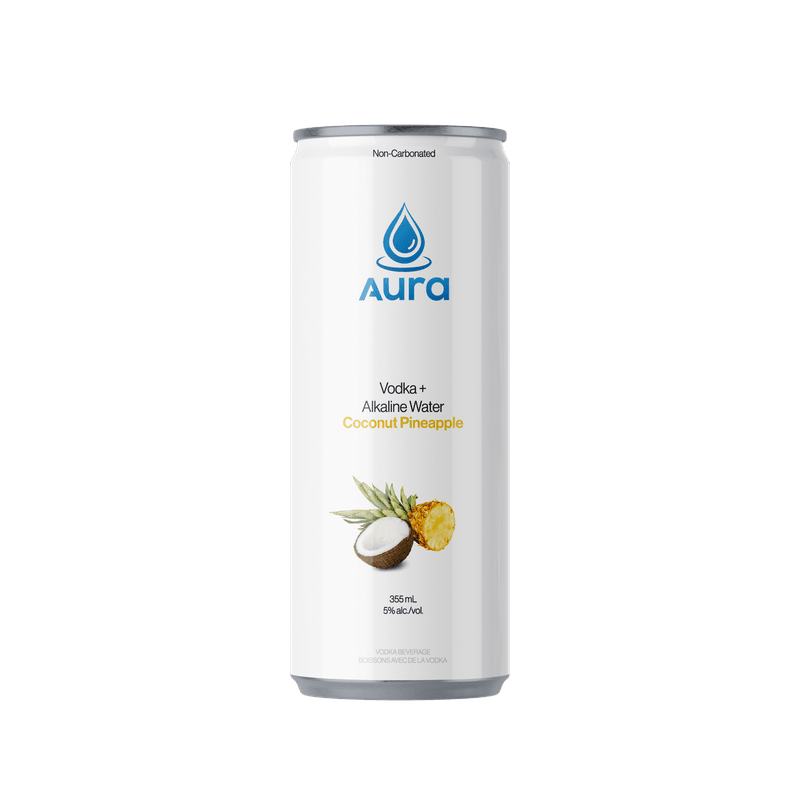
You have celiac disease, or you live with someone who does, and you are standing in front of a shelf in Toronto, Calgary or Vancouver working out whether the drink in your hand will cost you the next three days. So, plainly: is vodka gluten free? Yes — plain vodka distilled from wheat, rye or barley is considered gluten-free by Canadian regulators and by celiac organisations, because the distillation step leaves the gluten protein behind. The real risk in a vodka product almost never comes from the vodka. It comes from what gets added after the still.
Is vodka gluten free? The short answer and the one asterisk that matters
Gluten is a protein — a large, non-volatile molecule. Distillation boils a fermented mash and collects the vapour: ethanol boils at 78.4 °C and carries over, while proteins stay behind in the pot. The US Food and Drug Administration states in its gluten-free labelling guidance that "it is unlikely that gluten will be present in a distilled ingredient because distillation is a purification process that separates volatile components like alcohol and flavors from nonvolatile materials like proteins and sugars."
The asterisk: distillation only protects what goes through the still. Flavourings, colourings, sweeteners and mixers added afterwards have never been distilled. That is where the residual risk sits — and where Canadian regulators draw their line.
Gluten free vodka Canada: what the labelling rules actually permit
Canada is unusually specific here. Section B.24.018 of the Food and Drug Regulations prohibits representing a food as gluten-free if it contains any gluten protein or modified gluten protein. The Canadian Food Inspection Agency then maintains a dedicated "Gluten-free and vodka" section (last modified 10 November 2025) that spells out the rest:
- "Vodka made from gluten containing grains and processed by fractional distillation are considered 'specially processed or specially formulated' to remove gluten, and therefore meet the intent of Division 24 of the FDR in protecting the health and safety of people with Celiac disease."
- A gluten-free claim is permitted only if the residual gluten protein in the finished product is below 20 ppm and the manufacturer or importer holds documentation proving it.
- "Flavoured vodka may not qualify for the claim as flavouring preparations and other ingredients added after the distillation may be derived from gluten-containing grains."
- Qualifying statements are not required, and CFIA warns they "could be considered misleading to consumers if they create a false impression that all vodkas, including flavoured vodkas, are gluten-free."
The contrast with beer is instructive. CFIA will object to a gluten-free claim on beer brewed from barley, wheat, rye, oats or triticale even when the brewer has treated it to strip gluten out, because "results from currently available analytical testing methods for gluten, including ELISA tests, are not sufficient to substantiate a 'gluten-free' claim on these products." Canada also bans "low gluten" and "reduced gluten" claims outright. Distilled spirits get a pass that gluten-reduced beer does not, and the difference is deliberate.
One more rule worth knowing at the shelf: under B.01.010.1(2) of the FDR, gluten and allergen sources must be declared on alcoholic beverages even though most standardized alcoholic beverages are exempt from carrying a full ingredient list, per CFIA's labelling requirements for alcoholic beverages. A "Contains: wheat" or "Contains: barley" line on a Canadian can is a real signal, not boilerplate.
Celiac and vodka: what the celiac organisations advise
Celiac Canada is direct: "Distilled alcohol is gluten free even if made with a gluten-containing grain. This is because the gluten protein cannot vaporize and does not pass through the distillation process." Its alcohol guide lists vodka, gin, rum, tequila and brandy as safe, then adds the caution that matters most for ready-to-drink products: "flavored spirits and pre-mixed cocktails may contain added ingredients that could contain gluten." It also states that gluten-reduced and gluten-removed beers are not safe for someone with celiac disease.
How much gluten actually matters: the threshold evidence
The 20 ppm number is not arbitrary. In a multicentre, double-blind, placebo-controlled trial in the American Journal of Clinical Nutrition (2007), Catassi and colleagues randomised 49 adults with biopsy-proven celiac disease — on a gluten-free diet for at least two years — to a daily capsule of 0, 10 or 50 mg of gluten for 90 days. In the 50 mg group (n=13) the villous height-to-crypt depth ratio fell 20% (95% CI: −22%, −13%); the placebo group's rose 9%. The authors concluded contaminating gluten should be kept below 50 mg/day. A 2008 systematic review by Akobeng and Thomas in Alimentary Pharmacology & Therapeutics pooled 13 studies and concluded that "a daily gluten intake of <10 mg is unlikely to cause significant histological abnormalities."
Health Canada's June 2012 position paper built the 20 ppm limit on exactly that evidence: its exposure modelling found that at 20 ppm, intake would stay below 10 mg per day across all age groups studied. The same document estimates celiac disease affects about 1% of the population, or roughly 340,000 Canadians.
Where the evidence is genuinely weaker
The caveats are real, and several of them cut against a tidy answer:
- The threshold is a population average, not a personal guarantee. Akobeng and Thomas found tolerance varied widely: some patients tolerated 34–36 mg/day, while others consuming about 10 mg/day developed mucosal abnormalities. In the Catassi trial, one patient in the 10 mg arm relapsed clinically. Group sizes were 13 per arm — small.
- Gluten testing is imperfect. Tanner and colleagues (PLoS One, 2013) compared sandwich ELISA against mass spectrometry across 60 beers. ELISA readings spanned four orders of magnitude, up to 47,000 ppm for a wheat beer — yet roughly 20% of commercial beers read under 1 ppm by ELISA while showing near-average hordein content by MS, and six were outright false negatives.
- Processing breaks the assay, not just the protein. Colgrave, Byrne and Howitt (Journal of Agricultural and Food Chemistry, 2017) detected hydrolysed gluten peptides by LC-MS in commercial beers "crafted to remove gluten" that pass the competitive ELISA standard. Panda and Garber of the FDA (Frontiers in Nutrition, 2019) call routine antibody methods' inability to distinguish hydrolytic patterns "a severe limitation." Health Canada concedes ELISA "may have difficulty detecting and/or quantifying proteins that have been hydrolyzed, fragmented or otherwise structurally altered."
- Almost none of this work tested spirits. The peer-reviewed measurement literature is overwhelmingly about beer, because beer is the hard case. Confidence in distilled spirits rests on the physical chemistry of distillation plus regulatory and clinical consensus, not on a large published series of assayed vodkas.
To be explicit about what none of this shows: nothing here says any vodka drink is healthier, safer or gentler than another. The alcohol is identical either way. Gluten-free status is a question about a protein, not a health benefit.
What to do today: a practical checklist for gluten free canned cocktails
- Plain vodka, neat or with a gluten-free mixer, is the low-friction choice. Grain source does not change the answer for unflavoured vodka.
- Read the "Contains" statement on the can. In Canada it is legally required to disclose gluten sources even when there is no ingredient list.
- Treat flavoured and pre-mixed drinks as a separate question. Ask the producer what the flavouring is derived from and whether they hold gluten test documentation for the finished product — that documentation is what CFIA expects a gluten-free claim to rest on.
- Skip gluten-reduced beer. Both Celiac Canada and CFIA are unambiguous on this one.
- If you react, log it. Brand, flavour and date is more useful to your gastroenterologist than a vague suspicion of "cocktails."
That last point is why we built Aura the way we did. Our vodka water cocktails are premium distilled vodka, alkaline water and natural flavour — gluten-free, with no added sugar, no artificial sweeteners and no preservatives. They are also completely still — no carbonation, no bubbles — which is a texture decision, not a health claim. A short ingredient deck is simply easier to verify; why Aura lays out the reasoning.
Ready to try it
Aura comes in Cucumber Lime, Coconut Pineapple and Mango Peach, in 355 mL cans by the case of 24. Direct and wholesale ordering delivers to Ontario addresses only; in British Columbia or Alberta, check where to buy — BC Liquor Stores and licensed private retailers in BC, AGLC-licensed private retailers in Alberta. Please enjoy responsibly, and only if you are of legal drinking age in your province.
This article summarises published research and Canadian regulatory guidance for general interest. It is not medical advice. If you have celiac disease or a gluten-related disorder, talk to your physician or a registered dietitian about your own diet.
Sources
- Canadian Food Inspection Agency. Allergen-free, gluten-free and cross-contamination statements ("Gluten-free and vodka"; "Gluten-free beer"; "Low gluten or reduced gluten claims"). Date modified 10 November 2025. inspection.canada.ca
- Canadian Food Inspection Agency. Labelling requirements for alcoholic beverages (food allergen, gluten and added sulphite labelling; vodka compositional requirements). inspection.canada.ca
- Canadian Food Inspection Agency. Compliance and enforcement of gluten-free claims. Date modified 22 March 2024. inspection.canada.ca
- Health Canada, Bureau of Chemical Safety, Food Directorate. Health Canada's Position on Gluten-Free Claims. June 2012. PDF
- Catassi C, Fabiani E, Iacono G, et al. A prospective, double-blind, placebo-controlled trial to establish a safe gluten threshold for patients with celiac disease. American Journal of Clinical Nutrition. 2007;85(1):160–166. PMID 17209192. PubMed
- Akobeng AK, Thomas AG. Systematic review: tolerable amount of gluten for people with coeliac disease. Alimentary Pharmacology & Therapeutics. 2008;27(11):1044–1052. PMID 18315587. PubMed
- Tanner GJ, Colgrave ML, Blundell MJ, Goswami HP, Howitt CA. Measuring hordein (gluten) in beer — a comparison of ELISA and mass spectrometry. PLoS ONE. 2013;8(2):e56452. PMID 23509606. PubMed
- Colgrave ML, Byrne K, Howitt CA. Liquid chromatography–mass spectrometry analysis reveals hydrolyzed gluten in beers crafted to remove gluten. Journal of Agricultural and Food Chemistry. 2017;65(44):9715–9725. PMID 29047268. PubMed
- Panda R, Garber EAE. Detection and quantitation of gluten in fermented-hydrolyzed foods by antibody-based methods: challenges, progress, and a potential path forward. Frontiers in Nutrition. 2019;6:97. PMID 31316993. PubMed
- Celiac Canada. Alcohol Labelling in Canada. celiac.ca
- Celiac Canada. Navigating Alcohol Choices with Celiac Disease: What's Safe and What to Avoid. celiac.ca
- US Food and Drug Administration. Questions and Answers on the Gluten-Free Food Labeling Final Rule. fda.gov