
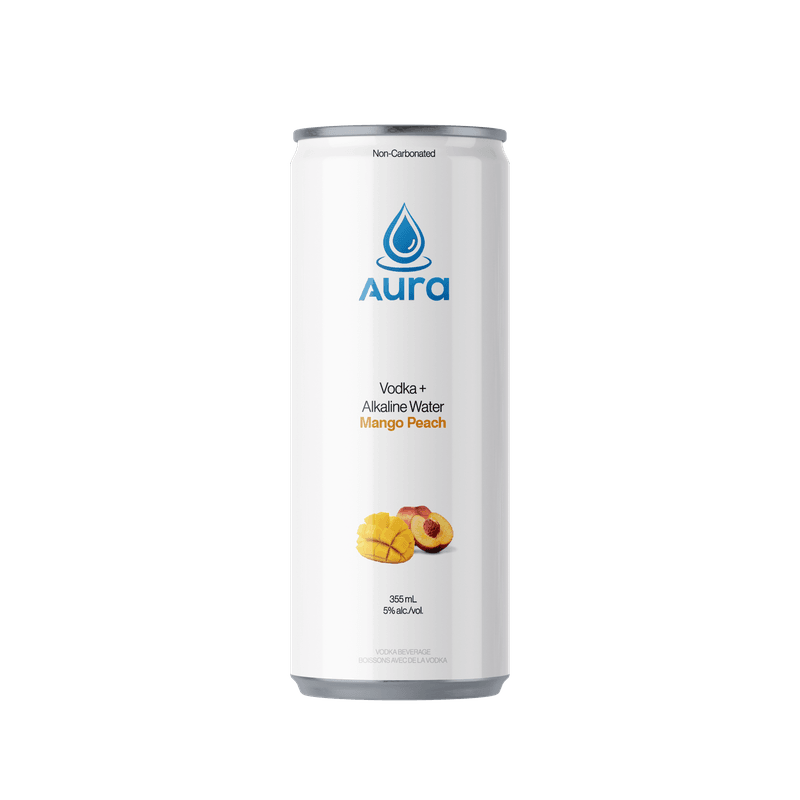
You cracked a can on the patio, got talking, and twenty minutes later the last third tastes wrong — sweeter, softer, duller than the one you opened. That is not the can and not your imagination. Temperature and taste research has measured this exact effect for four decades, and the findings are specific enough to act on tonight: the same liquid genuinely tastes different at 4 °C than at 20 °C, and the change runs opposite to what most people guess.
The short answer you can use today
- Serve at 4 °C or below. Health Canada advises keeping your fridge at 4 °C (40 °F) or lower, so a correctly set Canadian fridge does this job for you.
- Give it real fridge time. Four to six hours upright beats twenty minutes in the freezer, which chills unevenly.
- Chill in ice and water. A can buried in a slurry holds temperature far better than one perched on dry cubes: water conducts heat away, air does not.
- Outdoors, work in twenty-minute windows. A 355 mL can on a warm Ontario patio climbs through the sensory range fast.
- Go easy on ice in the glass. Aura is still, with no carbonation to protect — but melting ice dilutes flavour. One or two large cubes, not a glass of crushed.
What temperature and taste research actually found
The mechanism sits inside the taste cell. In 2005, Talavera and colleagues reported in Nature that TRPM5 — an ion channel operating downstream of the sweet, umami and bitter receptors — is itself heat-activated, with inward currents that “increase steeply at temperatures between 15 and 35 °C”. Warming across that same window markedly increased the gustatory nerve response to sweet compounds in wild-type mice, but not in mice bred without Trpm5. Sweetness is temperature-dependent at the hardware level.
Human psychophysics pointed the same way earlier. Green and Frankmann, in Chemical Senses (1987), cooled both the tongue and the test solutions from 36 °C to 28 °C or 20 °C and recorded measurable drops in the perceived sweetness of sucrose and the bitterness of caffeine. Saltiness (sodium chloride) and sourness (citric acid) were unaffected. Their sharper finding: the temperature of the tongue, not the liquid, was the critical factor, and swinging tongue temperature by 16 °C shifted perceived sweetness by as much as 100%.
Sweet and bitter move; salt and sour stay put
That asymmetry is the most useful thing in this literature. Warming does not turn flavour up in general — it selectively inflates the two qualities you least want inflated in a light, dry drink, while the acid notes that give it an edge stay flat. The balance tips rather than getting louder.
Wilson and Lemon (Journal of Neurophysiology, 2014) recorded brainstem neurons in 25 mice given sucrose at 18, 22, 30 and 37 °C. Mean activity for 0.1 M sucrose rose 1,049% on warming from 18 °C to 30 °C, against 152% for a stronger 0.56 M solution. Warmth does most to weak concentrations — the register a lightly flavoured drink lives in.
Why cold drinks taste different — and why “flat” is the wrong word
Most people assume a warm drink tastes flat because its aroma has escaped. Physically, warming does the opposite: it drives more volatile compounds out of the liquid and into the air above it, which is why a warm glass of almost anything smells stronger. Barry Green’s chapter for the U.S. National Academies (1993) is candid about the gap here — he notes that the effect of temperature on retronasal odour perception “has not been studied”, even though the physics of volatility is not in dispute.
So a warm can is not flat in the aroma sense. What it has lost is the cold — a sensation your mouth reports on its own, and much of what “refreshing” means. Remove it and the sweet and bitter notes have swollen while their counterweight is gone. That reads as syrupy, but the cause is amplification, not loss. With Aura there is no fizz to lose either way: it is a still vodka water, so it cannot go flat at all.
Pramudya and Seo (Frontiers in Psychology, 2018) served coffee to 79 adults and green tea to 78 adults at 5 °C, 25 °C and 65 °C. Six sensory attributes of the coffee differed significantly, and eighteen did for the green tea. In their coffee data, temperature shifted perception more than the choice of coffee variety did.
Serving temperature for drinks like this one
Nobody has run a controlled trial on the ideal serving temperature of a canned still vodka water. What the published work lets us do is reason from measured effects.
- Below roughly 12 °C, sweetness is actively suppressed. Green and Nachtigal (Chemical Senses, 2015) tested sweeteners across 5–41 °C and found that cooling to 5–12 °C directly reduces sweetness intensity. A can from a 4 °C fridge sits below that line.
- Between about 20 °C and 30 °C, taste is easiest to detect. Green’s 1993 review puts the low point of basic-taste detection thresholds in that band — useful for formal evaluation, unhelpful for a drink meant to read clean.
- Mild cooling has a second, slower effect. The same 2015 paper found cooling from 37 °C to 21 °C did not blunt initial sweetness but increased sweet-taste adaptation, so sweetness faded faster across sips. Pace matters, not just the first mouthful.
Colder is the more forgiving end for a light, dry format. Canned cocktail serving differs from pouring wine in one way: the can is your temperature reservoir, and once it is open the clock starts. Aura has no added sugar and no artificial sweeteners, so there is less sweetness for warmth to amplify — but warmth pushes both the natural fruit aroma and the ethanol out faster, which is what makes a warm can read boozy. To see how the three flavours are built, try our vodka water cocktails and the why Aura page.
What this research does not show
- None of this is a health claim. A cold can and a warm can contain identical alcohol. Temperature changes perception, not what alcohol does in your body. Aura is not healthier, safer or less intoxicating at any temperature.
- Much of the mechanism work is rodent work. Talavera and colleagues, and Wilson and Lemon, used mice. A mouse gustatory nerve is a model, not a tongue.
- The human evidence is messier than the headline. Green and Nachtigal concluded temperature acts on sweet taste through at least two mechanisms, possibly earlier in transduction than the TRPM5 account predicts. The single-channel story is incomplete.
- Nothing here was tested on vodka water. Sucrose and caffeine in a lab; coffee and tea in a booth. Extending them to a canned cocktail is reasonable, but it is extension.
- Individual wiring varies. Talavera and colleagues point to “thermal taste” — taste sensations evoked by heating or cooling the tongue with nothing on it.
Put the case in the fridge tonight
Aura is available across British Columbia, Alberta and Ontario. Our own direct and wholesale ordering delivers to Ontario addresses only; in Alberta, look for AGLC-licensed private retailers, and in BC, BC Liquor Stores and licensed private retailers. Find your nearest option on where to buy — then do the one thing this article comes down to, and chill it properly first.
Please enjoy Aura responsibly, and only if you are of legal drinking age in your province. Canada’s Guidance on Alcohol and Health (CCSA, 2023) places 1–2 standard drinks per week in its low-risk band and notes that more than 2 drinks on one occasion raises the risk of harm. This article summarises published research for general interest and is not medical advice.
Sources
- Talavera, K., Yasumatsu, K., Voets, T., Droogmans, G., Shigemura, N., Ninomiya, Y., Margolskee, R.F., & Nilius, B. (2005). Heat activation of TRPM5 underlies thermal sensitivity of sweet taste. Nature, 438(7070), 1022–1025. DOI 10.1038/nature04248; PMID 16355226. https://doi.org/10.1038/nature04248
- Green, B.G., & Frankmann, S.P. (1987). The effect of cooling the tongue on the perceived intensity of taste. Chemical Senses, 12(4), 609–619. DOI 10.1093/chemse/12.4.609. https://doi.org/10.1093/chemse/12.4.609
- Green, B.G., & Nachtigal, D. (2015). Temperature affects human sweet taste via at least two mechanisms. Chemical Senses, 40(6), 391–399. DOI 10.1093/chemse/bjv021. https://doi.org/10.1093/chemse/bjv021
- Wilson, D.M., & Lemon, C.H. (2014). Temperature systematically modifies neural activity for sweet taste. Journal of Neurophysiology, 112(7), 1667–1677. DOI 10.1152/jn.00368.2014; PMCID PMC4157175. https://pmc.ncbi.nlm.nih.gov/articles/PMC4157175/
- Pramudya, R.C., & Seo, H.-S. (2018). Influences of product temperature on emotional responses to, and sensory attributes of, coffee and green tea beverages. Frontiers in Psychology, 8, 2264. DOI 10.3389/fpsyg.2017.02264; PMCID PMC5769193. https://pmc.ncbi.nlm.nih.gov/articles/PMC5769193/
- Green, B.G. (1993). Heat as a factor in the perception of taste, smell, and oral sensation. In B.M. Marriott (Ed.), Nutritional Needs in Hot Environments. Washington, DC: National Academies Press. https://www.ncbi.nlm.nih.gov/books/NBK236241/
- Canadian Centre on Substance Use and Addiction (2023). Canada’s Guidance on Alcohol and Health. Ottawa: CCSA. https://www.ccsa.ca/en/canadas-guidance-alcohol-and-health
- Health Canada. Interactive tool on food safety — In your fridge. Government of Canada. https://health.canada.ca/en/health-canada/services/general-food-safety-tips/interactive-guide.html?l=3