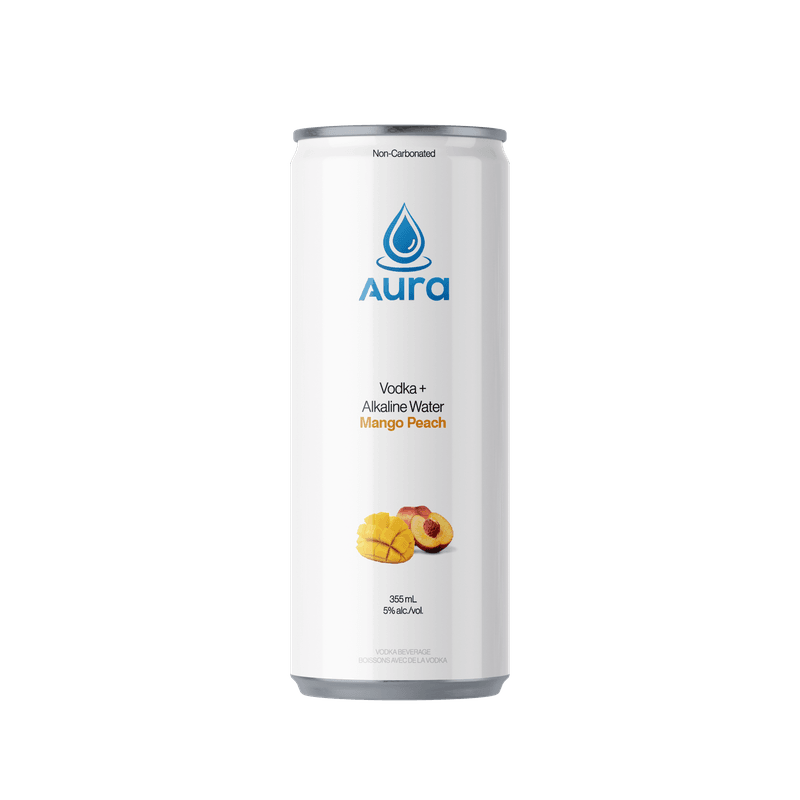
Two cans in the cooler look almost identical, and both ingredient lists open with the same word: water. That is the water quality canned drinks problem in one line — the largest ingredient by a wide margin is the one nobody tells you anything about. No mineral analysis, no pH, no source. The short answer: in Canada that water sits under a mix of drinking water guidelines and food regulations, most of the numbers that matter concern taste rather than safety, and label-reading beats any front-of-can claim.
The water quality canned drinks checklist: what Canada actually regulates
The Guidelines for Canadian Drinking Water Quality, published by Health Canada with the Federal-Provincial-Territorial Committee on Drinking Water, are the reference point for the municipal supply most Canadian beverage plants draw from. They set three different kinds of numbers, and confusing them is where water marketing usually goes wrong.
Health limits versus taste limits
- Maximum acceptable concentrations (MACs) — health-based limits for contaminants.
- Aesthetic objectives (AOs) exist only because a substance affects taste, odour or appearance: 200 mg/L for sodium, 250 mg/L for chloride, 500 mg/L for both sulphate and total dissolved solids (TDS), 0.1 mg/L for iron, 0.02 mg/L for manganese.
- Operational guidance — parameters that keep treatment and distribution working. pH sits here.
That last one surprises people. Health Canada's guideline technical document on pH (August 2015) states that "the operational guideline for pH is a range of 7.0 to 10.5 in finished drinking water" — a wide band set to make treatment effective and control corrosion, not to protect you from acidity. It is blunt about the biology: "There is no evidence of an association between the pH of the diet (food or drinking water) and direct adverse health effects."
Taste itself has no number at all. Health Canada's guideline technical document on taste (2005) concludes that "taste cannot be measured objectively," so "a maximum acceptable limit for drinking water has not been specified."
Where packaged drinks actually sit
Here is the limit worth knowing: those guidelines govern water supplies, not sealed containers. Packaged water is a food, regulated under Division 12, Part B of the Food and Drug Regulations. The CFIA's labelling rules for prepackaged water and ice make mineral and spring water declare their source location, "the total dissolved mineral salt content in parts per million" and total fluoride. A flavoured alcoholic beverage is not prepackaged water, so it carries none of those declarations — hence a can that tells you almost nothing.
One rule does carry over usefully: added carbon dioxide must be flagged with "a descriptive term that indicates this addition, such as 'carbonated' or 'sparkling'." Absent those words, you are looking at a still drink.
What water is used in vodka water — and why it dominates the can
Run the arithmetic on a 355 mL can at 5% ABV: about 17.8 mL of pure alcohol. From a 40% ABV vodka that is roughly 44 mL of spirit, leaving about 311 mL — near 88% of the can — as added water. And 44 mL of vodka is itself about 60% water, another 27 mL. Better than nine of every ten millilitres in the can is water. At 7% ABV, water still accounts for more than four fifths of the volume.
Ask what water is used in vodka water and you are asking about the overwhelming majority of the product — which is why water treatment is a formulation decision, not a plumbing one. Our approach is set out in why Aura.
What mineral content and pH mean for taste
This is where the peer-reviewed work is useful. Platikanov and colleagues, in Water Research (2013), ran a chemometric analysis of sensory data covering 20 bottled mineral waters plus a second set of 25 tap and bottled samples. Preferred samples were "associated with moderate contents of total dissolved solids and with relatively high concentrations of HCO3−, SO42−, Ca2+ and Mg2+" together with higher pH values; high sodium, potassium and chloride scored worse.
The same group followed up in Talanta (2017): 69 untrained volunteers rated 25 bottled and tap waters characterised for conductivity, pH, TDS and major ions. The finding held — "Volunteers preferred waters rich in calcium bicarbonate and sulfate, rather than in sodium chloride." Mineral content is not one dial marked "more"; which ions are present matters more than the total.
Two thresholds from Health Canada's taste document are worth carrying into your next mineral water cocktails experiment. Iron is detectable at roughly 0.04 mg/L in distilled water but only at 0.12 mg/L in a mineralised spring water with 500 mg/L TDS — minerals genuinely mask other flavours. Residual chlorine has an average taste threshold of 0.156 mg/L, range 0.02 to 0.29 mg/L at pH 7.0. If your home-built vodka water tastes faintly of a swimming pool, that is the tap, not the spirit.
What pH 8.5+ does and does not mean
Aura is built on alkaline water at pH 8.5 or above, and honesty matters more than enthusiasm here. A 2026 review in Frontiers in Medicine by Alebrahim and colleagues concluded that its effects are "modest and likely driven more by mineral composition than pH alone," that "claims of systemic alkalinization, enhanced immunity, anti-aging, and disease prevention are not supported by robust clinical evidence," and that it "should not be routinely recommended in primary care."
Note too that pH 8.5 sits inside the 7.0 to 10.5 operational band Health Canada treats as normal for ordinary finished tap water. We use alkaline water for how it carries a soft, low-bitterness profile alongside cucumber, coconut or mango — a taste decision consistent with the sensory literature above, not a health claim.
The caveats, stated plainly
- The sensory studies tested plain water, not alcoholic drinks. Nobody has shown ion preferences transfer cleanly to a flavoured, 5% ABV can.
- Both preference studies came from one research group and used European panels; independent Canadian replication is thin.
- The alkaline water evidence base is weak — the 2026 review flags small samples, short interventions, heterogeneous designs and animal data that "cannot be directly extrapolated to humans."
- No canned drink is healthier, safer or less intoxicating because of its water. The alcohol is identical either way. Taste or comfort differences are not medical benefits, and being still rather than carbonated is a sensory property, not a health outcome.
What you can do today
- Look up your municipality's annual water quality report — most Canadian cities publish TDS, hardness, pH and chlorine residual, the baseline local drinks start from.
- Check the can for "carbonated" or "sparkling" — absent those words, it is a still drink.
- Chill properly before judging; warm water reads more mineral and bitter.
- Building mineral water cocktails at home? Run your tap water through an activated carbon filter first to drop chlorine below its taste threshold.
- Treat pH-based health claims as marketing until a regulator or systematic review says otherwise.
Buying vodka water in Canada
Aura comes in 355 mL cans by the case of 24 — Cucumber Lime, Coconut Pineapple, Mango Peach — across British Columbia, Alberta and Ontario. Our own direct and wholesale ordering delivers to Ontario addresses only. In Alberta, ask an AGLC-licensed private retailer; in BC, check BC Liquor Stores and licensed private retailers; elsewhere, start at where to buy.
If water is nine tenths of what you drink, it deserves nine tenths of the attention. Read the label, chill the can, taste it against whatever else is in your fridge — then browse our vodka water cocktails and pick a flavour.
Please enjoy Aura responsibly and only if you are of legal drinking age in your province. The Canadian Centre on Substance Use and Addiction's 2023 guidance sets out a continuum of risk in which "2 standard drinks or less per week" carries the lowest risk of alcohol-related consequences. This article summarises published research for general interest and is not medical advice.
Sources
- Health Canada and the Federal-Provincial-Territorial Committee on Drinking Water. Guidelines for Canadian Drinking Water Quality — Summary Tables. Updated December 2025. canada.ca
- Health Canada. Guidelines for Canadian Drinking Water Quality: Guideline Technical Document — pH. August 2015. canada.ca
- Health Canada. Guidelines for Canadian Drinking Water Quality: Guideline Technical Document — Taste. 2005. canada.ca
- Canadian Food Inspection Agency. Prepackaged water and ice: labelling requirements. Modified 15 January 2025. inspection.canada.ca
- Platikanov S, Garcia V, Fonseca I, Rullán E, Devesa R, Tauler R. "Influence of minerals on the taste of bottled and tap water: a chemometric approach." Water Research 2013;47(2):693–704. DOI 10.1016/j.watres.2012.10.040. PMID 23200507. PubMed
- Platikanov S, Hernández A, González S, Cortina JL, Tauler R, Devesa R. "Predicting consumer preferences for mineral composition of bottled and tap water." Talanta 2017;162:1–9. DOI 10.1016/j.talanta.2016.09.057. PMID 27837803. PubMed
- Alebrahim H, Alsaei A, Sefen P, Hasan M, Ramadhan A, Deen GR. "The health benefits of alkaline water: is it a fact or marketing myth?" Frontiers in Medicine 2026;13:1849818. DOI 10.3389/fmed.2026.1849818. PMID 42433989. PubMed Central
- Canadian Centre on Substance Use and Addiction. Canada's Guidance on Alcohol and Health. CCSA, 2023. ccsa.ca