
You wake up, piece the night together from texts and photos, and there is a gap you cannot fill. If you are asking why do you black out drinking even when you did not feel "that drunk," the short answer from the research is this: blackouts are less about how much you drink in total and more about how fast your blood alcohol rises. A quick spike interferes with the part of the brain that records new memories, so the events happened, but your brain never saved them. Below is what the alcohol blackout research actually shows, who is most at risk, and what you can change starting tonight.
What a blackout is (and is not)
A blackout is not passing out. During a blackout you can stay awake, talk, walk, order food and send messages. What fails is memory formation. In his review in Alcohol Research & Health, neuroscientist Aaron White describes blackouts as periods of amnesia for events that happened while intoxicated, and notes that people in a blackout can still carry on conversations and perform complex behaviour (White, 2003).
Fragmentary blackout vs. en bloc blackout
Researchers separate blackouts into two types:
- Fragmentary blackout (sometimes called a "brownout"): partial memory loss with islands of recall. Details often come back when someone reminds you, or when you see a photo.
- En bloc blackout: complete amnesia for a stretch of time. Cues from friends do not bring anything back, because the memory was never formed in the first place.
White's review reports that fragmentary blackouts are far more common than en bloc blackouts (White, 2003). If you have had memory loss from alcohol that partly returned the next day, you have most likely had a fragmentary blackout.
So why do you black out drinking? The hippocampus and a fast-rising BAC
Forming a new autobiographical memory depends heavily on the hippocampus, a structure deep in the brain that helps move experiences from short-term awareness into longer-term storage. White's review summarises animal and human research showing that alcohol disrupts hippocampal activity, which is why short-term memory can seem intact in the moment (you can follow a conversation) while the transfer to long-term memory quietly fails (White, 2003).
Speed matters. White describes laboratory work by Donald Goodwin in which blackouts began during the first few hours of drinking, while blood alcohol concentration (BAC) was still climbing; peak BACs in that study averaged around 0.28 percent. The review identifies a rapid rise in BAC, gulping drinks and drinking on an empty stomach as factors that make blackouts more likely (White, 2003).
A later review by Reagan Wetherill and Kim Fromme, published in Alcoholism: Clinical and Experimental Research, reports that blackouts typically occur at breath alcohol concentrations of 0.06 g/dl or higher, with most occurring around 0.20 g/dl, and that pregaming and drinking games are linked to blackouts. In one study they cite, 25% of participants reported blackouts on occasions that involved prepartying (Wetherill & Fromme, 2016). Each of these patterns pushes alcohol into the bloodstream quickly.
Memory loss, alcohol and young adults: how common are blackouts?
More common than most people assume. White's review cites a survey of US college students in which 51% of those who had ever consumed alcohol reported at least one blackout, 40% reported one in the past year, and 9.4% in the two weeks before the survey (White, 2003). Wetherill and Fromme put the figure at roughly 50% of college drinkers, and cite a longitudinal study in which 74% of participants had experienced a blackout by age 19 (Wetherill & Fromme, 2016).
A US national study by Ralph Hingson and colleagues surveyed young adults one year after high school in 2012–2013. Of 2,140 respondents, 1,463 (68%) had consumed alcohol, and 20% of those drinkers reported a blackout in the past six months. After controlling for how much people drank, having a blackout was the strongest independent predictor of most other alcohol problems measured, including missing class or work, doing something later regretted and experiencing an overdose (Hingson et al., 2016).
Who is most at risk
- People whose BAC rises fast: those who gulp drinks, drink on an empty stomach, pregame or play drinking games (White, 2003; Wetherill & Fromme, 2016).
- Women and people with lower body weight: Hingson's study found blackouts were more prevalent among females and among those with lower body weight (Hingson et al., 2016). White's review notes that men in one survey drank more often and more heavily, yet equal percentages of men and women reported recent blackouts.
- People mixing substances: combining alcohol with other drugs, including benzodiazepines or cannabis, raises risk (White, 2003). Hingson's team also linked blackouts to using multiple drugs and smoking.
- Young adults in heavy-drinking settings: in the Hingson data, living in a college dorm and frequent binge drinking were associated with blackouts.
What you can do today to lower your risk
These steps follow directly from the risk factors above. None of them makes heavy drinking safe; they target the fast BAC spike the research points to.
- Eat a real meal first. Drinking on an empty stomach is a named risk factor.
- Sip, don't shoot. Skip shots, chugging, drinking games and pregaming, the patterns most tied to rapid rises in BAC.
- Space your drinks. Alternate each alcoholic drink with water or a non-alcoholic drink, and decide your number before you go out.
- Count every drink. Canada's Guidance on Alcohol and Health from the Canadian Centre on Substance Use and Addiction (2023) states that consuming more than 2 standard drinks per occasion is associated with an increased risk of harms to self and others, including injuries and violence, and that less alcohol is better.
- Do not mix alcohol with other drugs, including sedatives and cannabis.
- Treat a blackout as a signal. If you have had one, Hingson's findings suggest it is worth reassessing how you drink, and talking to a healthcare provider if it keeps happening.
Caveats: what the alcohol blackout research does not show
- Most data is self-reported. Wetherill and Fromme point out the obvious problem: people are being asked to report on periods they cannot remember, and reconstructed memories are inherently fallible. There is also no standardised blackout measure, which makes studies hard to compare.
- True blackouts are rarely studied in the lab. Ethical limits prevent researchers from deliberately inducing them, so much of what we know about the rapid-rise mechanism comes from older laboratory studies with small samples and from animal work.
- Brain-imaging studies are small. The neuroimaging studies reviewed by Wetherill and Fromme involved roughly 24 to 113 participants, and they show associations in people with a blackout history, not proof that blackouts caused the differences.
- Sex differences are mixed. Some studies find women more vulnerable; others find no difference.
- Most samples are American students and young adults. We did not find comparable Canadian prevalence data, so results may not apply directly to every age group or to drinkers in Canada.
The research also does not show that any particular drink, mixer or brand prevents blackouts. The variable that matters is how much alcohol reaches your bloodstream and how quickly.
Where Aura fits, honestly
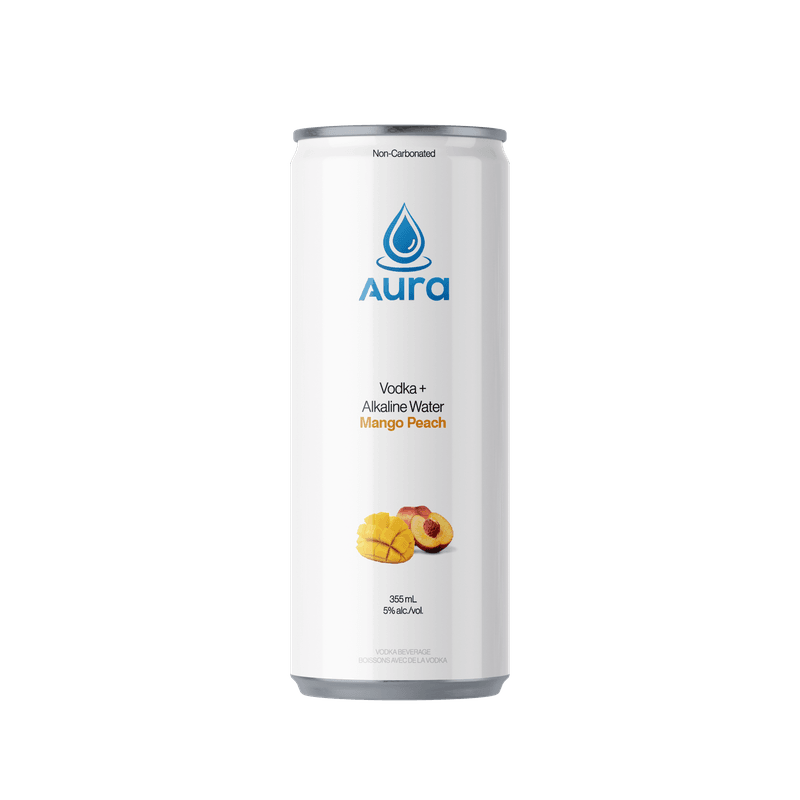
Aura is a still vodka water: premium vodka, alkaline water (pH 8.5+) and natural flavour, with zero carbonation, no added sugar and no artificial sweeteners. Because it has no bubbles, it is easy to sip slowly, which is what we like about it. But a can of Aura contains alcohol like any other drink, and nothing about it makes you less intoxicated or protects your memory. Count each can, pace yourself, and follow the same guidance above. You can read more about why Aura is made the way it is.
If a slower, simpler drink fits how you want to enjoy a night out, explore our vodka water cocktails in Cucumber Lime, Coconut Pineapple and Mango Peach. Aura is available across British Columbia, Alberta and Ontario; our own direct and wholesale ordering delivers to Ontario addresses only, so in BC or Alberta check where to buy through BC Liquor Stores, AGLC-licensed private retailers and other licensed retailers. Please enjoy responsibly and only if you are of legal drinking age in your province.
This article summarises published research for general interest and is not medical advice.
Sources
- White, A. M. (2003). What happened? Alcohol, memory blackouts, and the brain. Alcohol Research & Health, 27(2), 186–196. PMID: 15303630; PMCID: PMC6668891. https://pmc.ncbi.nlm.nih.gov/articles/PMC6668891/
- Wetherill, R. R., & Fromme, K. (2016). Alcohol-induced blackouts: A review of recent clinical research with practical implications and recommendations for future studies. Alcoholism: Clinical and Experimental Research, 40(5), 922–935. doi:10.1111/acer.13051. PMID: 27060868; PMCID: PMC4844761. https://pmc.ncbi.nlm.nih.gov/articles/PMC4844761/
- Hingson, R., Zha, W., Simons-Morton, B., & White, A. (2016). Alcohol-induced blackouts as predictors of other drinking related harms among emerging young adults. Alcoholism: Clinical and Experimental Research, 40(4), 776–784. doi:10.1111/acer.13010. PMID: 27012148; PMCID: PMC4820355. https://pubmed.ncbi.nlm.nih.gov/27012148/
- Canadian Centre on Substance Use and Addiction. (2023). Canada's Guidance on Alcohol and Health. https://www.ccsa.ca/canadas-guidance-alcohol-and-health